Gloria Steinem Tackles AI Misogyny at Intergenerational Summit
At 92, feminist pioneer Gloria Steinem joins forces with young activists to confront the growing threat of AI-generated deepfakes and digital abuse.
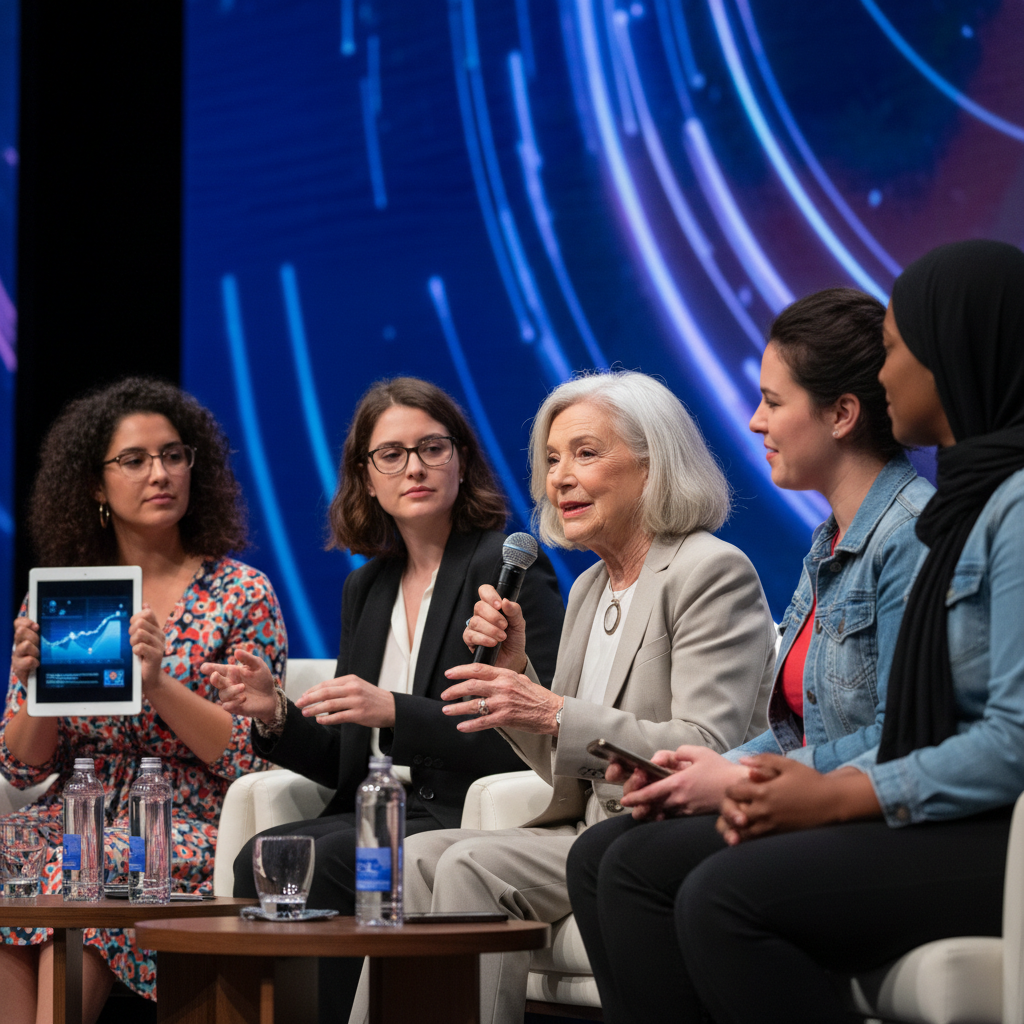
Gloria Steinem is still organizing. At 92, the legendary feminist icon shows no signs of stepping away from the movement she helped build. Instead, she is turning her attention to one of the most pressing and complex frontiers of modern civil rights: artificial intelligence.
At a landmark event in New York City, Steinem co-hosted the Intergenerational Feminist Summit. The gathering brought together veteran activists from the second-wave feminist movement and Gen Z digital organizers. Their shared goal was clear. They want to confront the rapidly escalating threat of AI-generated misogyny.
For decades, feminist struggles played out on the streets, in workplaces, and in legislative chambers. Today, the battleground has expanded into digital spaces. The rise of sophisticated generative AI tools has made it easier than ever to create and distribute harmful content targeting women. From deepfake pornography to automated harassment campaigns, the tools of oppression have gone digital. The guardrails are virtually non-existent.
“Technology changes, but the desire to control women remains the same,” Steinem said during her opening remarks. “This is not a new fight. It is the same fight with faster, more dangerous weapons. We cannot let technology outpace our humanity.”
The Rise of Digital Weaponization
The summit focused heavily on how AI tools are being weaponized against women, particularly young girls, journalists, and public figures. Deepfakes—highly realistic video, image, or audio recordings manipulated by AI—have emerged as a primary weapon of digital violence.
Security data analyzed by experts at the summit reveals a grim reality. Over 90 percent of deepfake videos online are non-consensual pornography, and nearly all of them target women. The ease with which these images can be generated means anyone with an internet connection can target a classmate, a colleague, or a public official. The consequences are devastating, leading to severe psychological trauma, professional ruin, and the silencing of female voices online.

Younger activists at the summit highlighted how this technology is currently disrupting schools and universities. “We are seeing high school girls targeted by classmate-created deepfakes, and school administrations simply do not know how to handle it,” said Maya Lin, a 22-year-old digital safety advocate who spoke on a panel. “It is a new form of sexual harassment that doesn’t leave physical marks but completely destroys a young person’s life.”
The threat goes beyond deepfakes. Algorithms designed to maximize engagement often amplify misogynistic content, driving users down radicalization pipelines. Automated bots can coordinate massive harassment campaigns in seconds, overwhelming a target’s social media feeds with threats of violence. Furthermore, women of color, LGBTQ+ individuals, and marginalized communities face disproportionate levels of these targeted digital attacks.
Bridging the Generational Divide
One of the summit’s main objectives was to bridge the gap between different generations of activists. While older feminists bring decades of organizing experience and historical perspective, younger activists possess a native understanding of the digital platforms where modern misogyny thrives.
The synergy was apparent throughout the panels. Activists in their twenties explained the mechanics of algorithmic bias and generative adversarial networks to octogenarian civil rights leaders. In turn, veteran organizers shared lessons on building sustainable coalitions and lobbying for systemic policy changes.
“We need both sides of this coin,” Steinem noted during a panel discussion. “The younger generation has the technical vocabulary and the lived experience of growing up online. The older generation knows how to turn outrage into law. When we put those two things together, we become a force that cannot be ignored.”
The dialogue also touched on the historical context of technological shifts. Speakers reminded the audience that every major technological leap—from the printing press to the telephone and the internet—has been accompanied by new ways to marginalize women. The difference today is the unprecedented speed and scale at which AI operates. There is no time to wait decades for social norms to catch up.

Demanding Systemic Accountability
A major theme of the summit was moving away from “safety tips” and toward systemic reform. For years, the default response to online harassment has been to advise women to secure their accounts, block harassers, or simply log off. Speakers at the summit rejected this approach, calling it a form of digital victim-blaming.
Instead, the focus was squarely on tech companies and regulators. Panelists argued that technology platforms must be held legally accountable for the content they host and the algorithms they deploy. They discussed legislative solutions like the DEFIANCE Act, which aims to give victims of non-consensual digital replicas the right to sue perpetrators.
“We cannot solve a systemic, technological crisis with individual privacy settings,” said Sofia Rodriguez, a tech policy analyst who attended the event. “We need to reform laws like Section 230 of the Communications Decency Act, which currently shields tech platforms from liability. If a car company releases a vehicle with faulty brakes, they are held liable. If a tech company releases an AI tool that destroys lives, they face zero consequences. That has to change.”
Key Actions Proposed at the Summit
- Federal legislation criminalizing the creation and distribution of non-consensual deepfakes.
- Mandatory watermarking on all AI-generated media to clearly identify it as artificial.
- Increased diversity in the tech sector to ensure AI models are not trained on biased data sets that perpetuate sexist and racist stereotypes.
- Stricter algorithmic transparency requirements to reveal how platforms promote harmful content.
Organizing for the Digital Era
Despite the sobering topics, the atmosphere at the summit remained determined and hopeful. The event concluded with a call to action, urging attendees to contact their representatives, support tech-reform organizations, and continue building intergenerational networks.
For Steinem, the summit was a reminder of the power of collective action. She pointed out that while the tools of oppression are sophisticated, the tools of resistance are equally powerful. Organized resistance has always been the key to dismantling systemic bias, whether in the physical world or on a server.
“I’ve lived through enough history to know that progress is never a straight line,” Steinem said. “It’s a spiral. We come back to the same issues, but we come back at a higher level, with more knowledge and more allies. Looking around this room, seeing the brilliance of these young organizers, I am not afraid of the future. I am ready to fight for it.”
The summit made one thing clear: the struggle for gender equality is no longer confined to the physical world. As artificial intelligence continues to reshape society, the feminist movement is adapting, ensuring that the digital future belongs to everyone.
