Nicolas Cage Reacts to ‘Spider-Noir’ Cancellation After One Season
Nicolas Cage says his one-season run as Spider-Noir was perfect, even as Prime Video cancels the high-budget, Emmy-nominated Marvel series.
The Sudden End of a Pop-Art Experiment
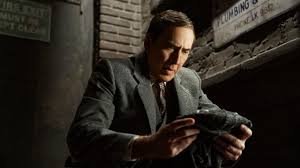
Nicolas Cage is not mourning the sudden end of his brief tenure as a hardboiled superhero. Amazon’s Prime Video has opted not to order a second season of “Spider-Noir,” the expensive, critically acclaimed comic-book adaptation that marked the Oscar-winning actor’s first major venture into series television.
Rather than expressing disappointment, Cage is framing the cancellation as a creative victory. He believes the single-season arc accomplished exactly what the creative team set out to do.
“For me, one season is perfect, having said what I wanted to say with this dangerous, innovative, pop-art Spider-Man,” Cage said in an exclusive statement. He closed his thoughts with a characteristically cryptic, philosophical sign-off: “Onwards, upwards, inwards.”
A Critical Darling Falls to Hollywood Budget Cuts
The decision to pull the plug on “Spider-Noir” highlights the brutal economic calculus currently dominating Hollywood. Despite pulling in a massive haul of 11 Emmy nominations—the most of any Prime Video series in 2026—the live-action drama fell victim to a tightening market on Wall Street. Entertainment conglomerates are no longer funding high-budget projects without matching, blockbuster-scale viewership numbers.
The series was co-helmed by showrunners Oren Uziel and Steve Lightfoot. Executive producers Phil Lord, Christopher Miller, and Amy Pascal steered the creative ship, aiming to translate their animated success into live-action grit.
It was a massive gamble for Sony’s catalog of Marvel characters. The production featured a dual-release format that allowed viewers to watch the entire run in either full color or classic, high-contrast black-and-white. While critics loved the visual risks, the cost-to-viewer ratio ultimately did not pencil out for Amazon executives.
Chilling with the Ghosts of 1940s Cinema
Cage threw himself into the role with his signature intensity, drawing heavily on pre-war American cinema to craft the voice of the aging, cynical detective. He wanted the character to sound like he walked straight off a vintage studio lot.
“I wanted to go back to those old ’30s and ’40s movies and watch some Howard Hawks and pick up the speed of delivery from those actors,” Cage explained when discussing his acting process.
He also took heavy inspiration from Billy Wilder’s 1944 noir masterpiece Double Indemnity, trying to channel the fast-talking energy of Fred MacMurray and Barbara Stanwyck. By mixing those mid-century cinematic mannerisms with Stan Lee’s classic superhero comic books, Cage aimed to create a stylistic collision. He compared the final product to a Roy Lichtenstein pop-art painting, hoping to offer audiences something radically unfamiliar.
The New Era of Streaming Economics
The cancellation comes as platforms struggle to balance the books after years of runaway spending. In the early 2020s, streaming services spent billions of dollars on premium dramas to drive subscriber growth. Today, the mandate from corporate boardrooms has shifted toward immediate profitability and retention, leaving little room for quirky, expensive, single-season cult hits.
Still, Cage’s gamble on television paid off in terms of prestige. The series boasts a 92% approval rating from critics and a 90% score from audiences on Rotten Tomatoes. It managed to resolve its central narrative arc by the end of its run, leaving only a handful of story threads dangling.
Many fans have already taken to social media to argue that a single, self-contained season preserves the show’s artistic integrity. Rather than dragging the mystery out over multiple years and diluting the tension, “Spider-Noir” remains a tight, completed work of art.
Looking Ahead: John Madden and the Digital Future
Cage’s partnership with Prime Video is far from over. He is already preparing to lead the streamer’s highly anticipated feature film Madden, where he will play the legendary NFL coach and broadcasting icon John Madden. The film is scheduled to premiere on November 18, representing another major bet on Cage’s drawing power.
The actor has long defended his choices to work outside the traditional theatrical window. Before major stars regularly migrated to digital screens, Cage faced industry skepticism for his willingness to jump into video-on-demand and streaming ecosystems.
“I was friendly to streaming a long time ago before it was cool,” Cage noted. He recalled a time when the media criticized him for taking straight-to-streaming roles, treating the move as a career misstep. “But now, everything is going that way. I knew streaming would ultimately keep actors working and keep the work viewable.”