Two Men Rescued Alive from Mud-Filled Nepal Flood Tunnel
Two construction workers survived for over two days inside a mud-choked hydroelectric tunnel in Nepal after catastrophic monsoon floods.
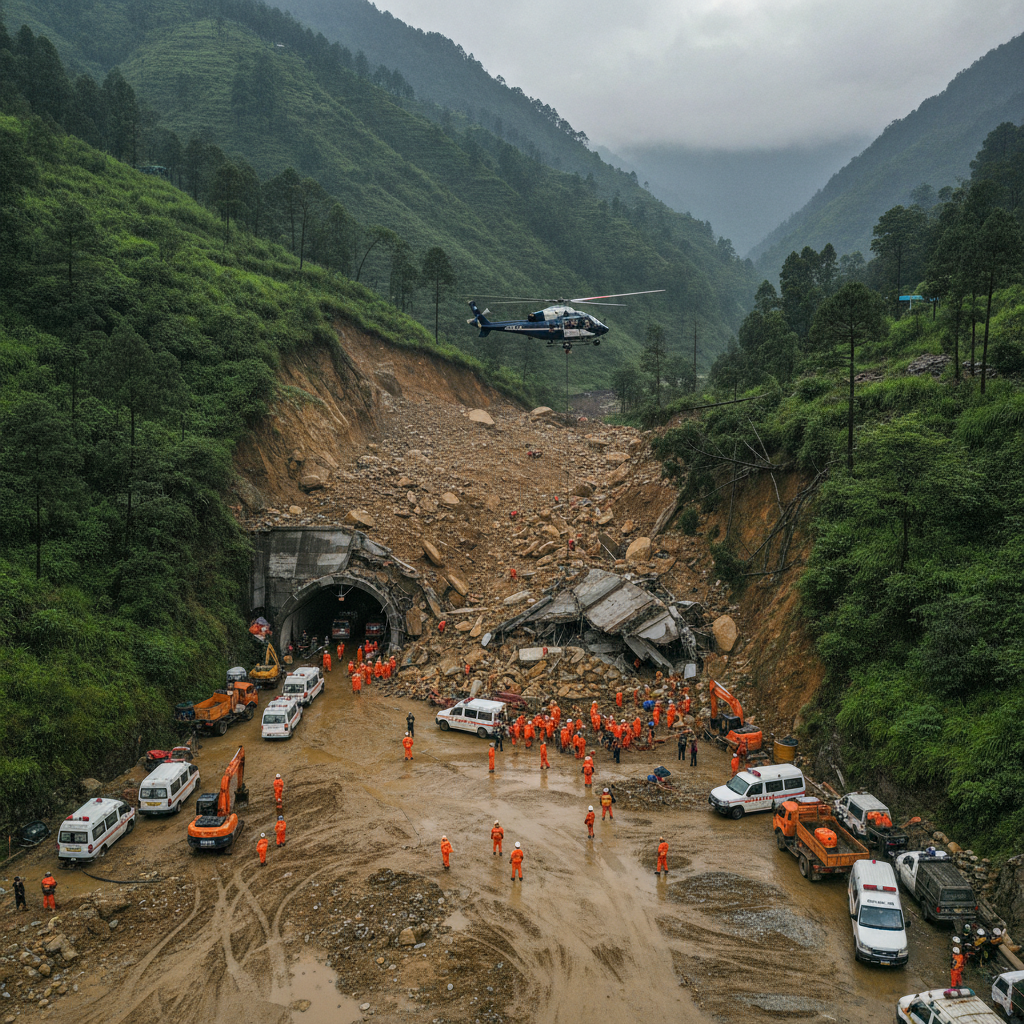
The Miraculous Extraction
It was pitch black, freezing, and suffocatingly quiet inside the diversion tunnel of the under-construction hydroelectric plant. For more than fifty hours, two laborers clung to a narrow metal pipe high up on the tunnel wall. Below them, a thick, viscous slurry of mud, logs, and debris filled the passage almost to the ceiling. Outside, a catastrophic monsoon deluge had turned the surrounding hills of Nepal into sliding walls of earth, cutting off roads and swallowing entire villages. Back inside the dark, the air was growing thin.
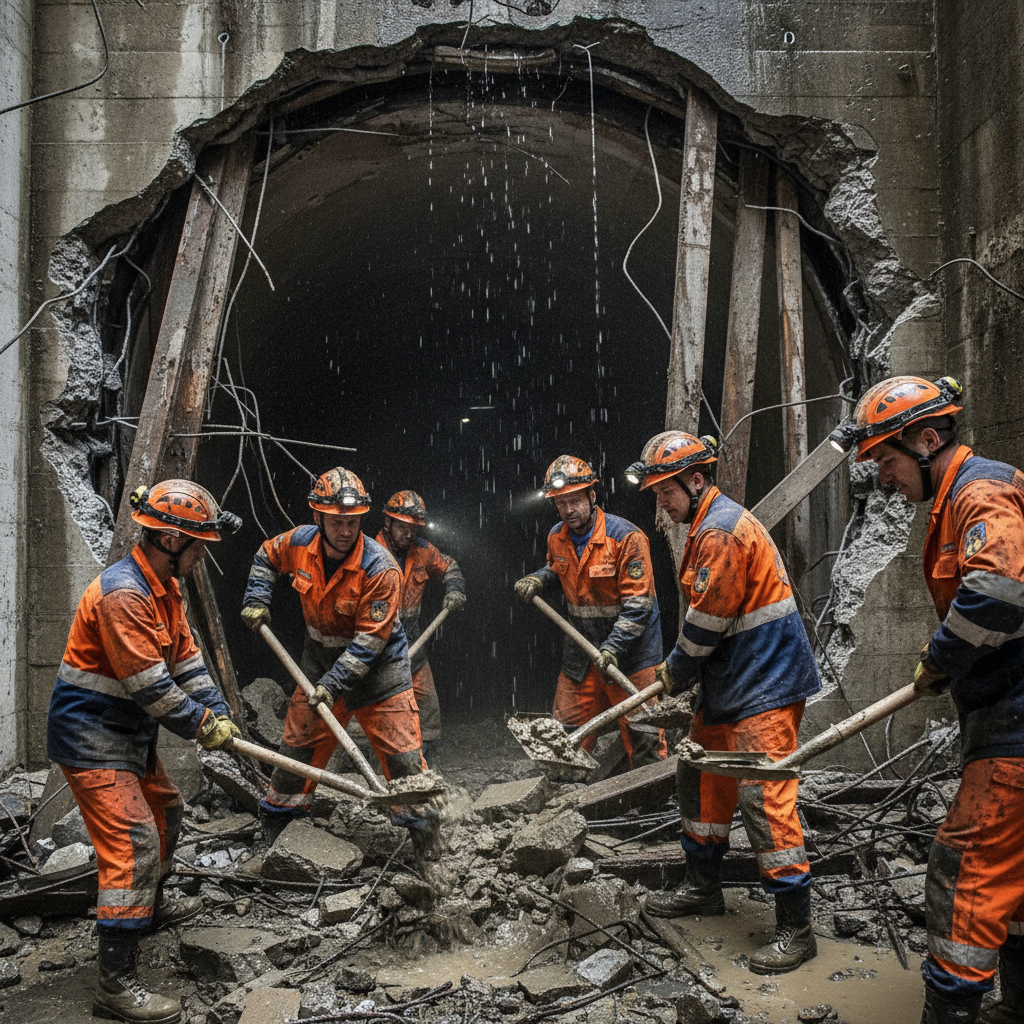
Then came the muffled, metallic clinking of rescue gear. It was a sound the two men had desperately prayed for but had almost given up hoping to hear. Onlookers and emergency crews watched in disbelief as rescue workers, caked in wet gray clay, pulled the two men out into the gray daylight. They were shivering violently, dehydrated, and exhausted, but they were remarkably alive.
The dramatic rescue in the Kavrepalanchok district, located just east of the capital city of Kathmandu, has become a rare symbol of survival amid one of the worst weather disasters the Himalayan nation has faced in decades. In late September, record-shattering rains triggered widespread flooding and landslides across Nepal, claiming over two hundred lives and leaving dozens of others missing. For these two workers, whose names have been kept private by local authorities, survival was a matter of inches, quick thinking, and sheer endurance.
Surviving the Mud-Choked Void
When the torrential rains peaked, the small river feeding the hydroelectric project swelled into a violent torrent. Within minutes, a massive mudslide tore down the mountain slope, directly targeting the tunnel entrance. Tons of earth and water surged into the narrow concrete passage, blocking the exit and trapping the crew inside. While some workers managed to escape just before the collapse, the two men were trapped deep within the mountain.
As the slurry rushed in, it began filling the tunnel like a giant pipe. The men scrambled upward, finding a small ledge where they could escape the rising debris. To keep from slipping into the thick mud below, they clung to a ventilation pipe that ran along the top of the tunnel. This pipe became their lifeline in more ways than one. It not only gave them a physical handhold but also provided a faint trickle of fresh air from the surface, preventing them from suffocating as the oxygen in the sealed chamber depleted.
For more than two days, they waited in absolute darkness. They had no food, no clean drinking water, and no way to signal the outside world. The cold was relentless. Damp tunnel air coupled with wet clothing can quickly induce hypothermia. They held onto each other for warmth, listening to the rumbling of the earth and the dripping of water, unsure if rescue teams even knew they were alive inside the mountain.
The Race Against the Hardening Clay
On the outside, the rescue operation was a logistical nightmare. The same landslides that trapped the men had blocked the main highways, preventing heavy earthmoving equipment from reaching the site. Rescuers from the Nepal Army, the police, and local volunteer groups had to travel on foot through treacherous terrain to reach the collapsed tunnel mouth.
When they finally arrived, they found the entrance completely sealed by a wall of wet earth and tangled tree roots. Time was their biggest enemy. As the rain finally stopped and the sun began to break through, the wet mud inside the tunnel started to settle and harden. If the mud dried completely, it would act like concrete, making it nearly impossible to dig through without heavy machinery.
Working in shifts, rescuers used shovels, buckets, and their bare hands to clear a narrow passage into the debris. It was delicate, dangerous work. A single wrong move could trigger a secondary collapse of the unstable earth above them. After hours of continuous digging, a small opening was cleared, and the rescue team began calling out into the darkness. To their astonishment, faint voices called back.
A Region Ravaged by Water
The survival of the two tunnel workers stands out against a backdrop of widespread devastation. The late-September storm dumped an unprecedented volume of rain across central and eastern Nepal. Kathmandu, a basin city surrounded by hills, saw its rivers burst their banks, flooding entire neighborhoods and leaving residents stranded on rooftops. According to local meteorological reports, some areas received nearly ten inches of rain in less than twenty-four hours, the highest recorded rainfall in over half a century.
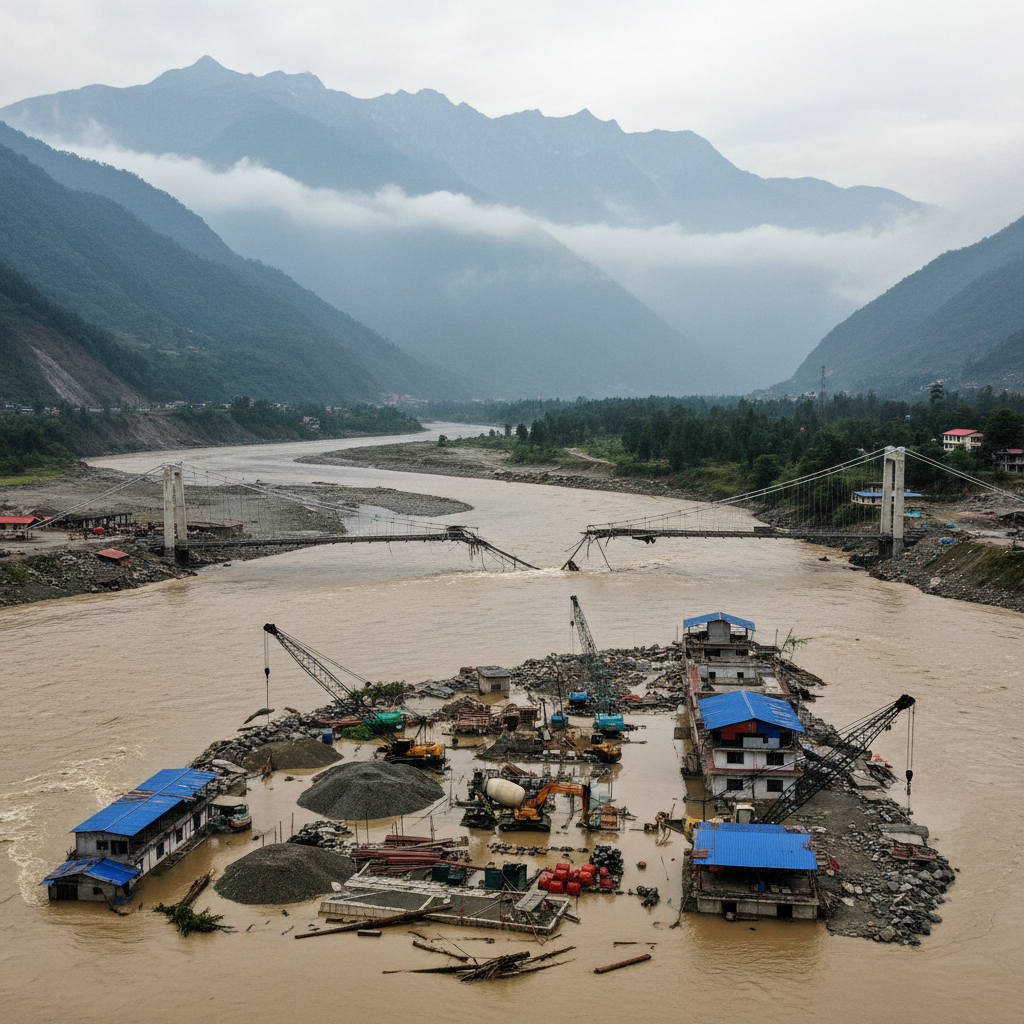
The impact on the country’s infrastructure has been severe. Dozens of bridges were swept away, severing vital transportation links between Kathmandu and the rest of the country. Power lines were ripped down, leaving hundreds of thousands of people in the dark, and water treatment plants were flooded, raising urgent concerns about waterborne diseases in the temporary shelters setup for displaced families.
Search and recovery operations are still active across several districts. Emergency workers are digging through the ruins of highway restaurants and buried vehicles, where many travelers were caught in landslides while trying to reach safety. The death toll continues to rise as remote mountain communities are slowly reached by search teams.
The Cost of Nepal’s Hydroelectric Ambitions
This incident has also renewed intense scrutiny over the safety of Nepal’s rapidly expanding hydroelectric sector. The country has pinned its economic future on harvesting the power of its fast-flowing Himalayan rivers, investing billions of dollars in run-of-the-river power plants. Much of this electricity is earmarked for export to neighboring India and Bangladesh, making the energy sector a critical piece of Nepal’s national economy.
However, many of these projects are built in highly unstable geological zones. The Himalayas are young, fragile mountains that are prone to seismic activity and landslides. Environmentalists and geologists have long warned that the construction of tunnels, roads, and dams without proper environmental impact assessments makes these slopes even more vulnerable to heavy rains.
- Many projects lack robust early-warning systems to alert workers to upstream flooding.
- Unregulated dumping of construction debris into riverbeds exacerbates downstream flooding during monsoons.
- Deforestation on steep slopes near construction sites increases the risk of massive mudslides.
As climate change accelerates, extreme weather events like this monsoon deluge are becoming more frequent and unpredictable. Infrastructure that was designed to withstand historical weather patterns is now failing under the pressure of these new, more intense storms. For the operators of Nepal’s hydro plants, the rescue of these two men is a stark warning that worker safety and structural resilience must be prioritized over rapid development.
A Long Road to Recovery
Following their rescue, the two workers were rushed to a nearby field hospital before being transferred to a larger medical facility in Kathmandu. Doctors reported that while the men were suffering from severe exposure, minor cuts, and dehydration, they were in stable condition and expected to make a full recovery. Their physical survival is secured, but the psychological trauma of spending over fifty hours in a dark, mud-filled tomb will likely take much longer to heal.
For the rest of Nepal, the focus now shifts from emergency rescue to the massive task of rebuilding. Roads need to be cleared, bridges reconstructed, and damaged power plants repaired. As the floodwaters slowly recede, leaving behind layers of thick silt and ruined homes, the country must confront a difficult reality: the mountains are changing, and the old ways of building are no longer safe.