Mortgage Rates Surge to Highest Level Since Last July
Home mortgage rates have jumped to their highest point since July, squeezing buyers and freezing the housing market as inflation concerns persist.
A Tough Market Gets Harder for Homebuyers
The hope of a spring thaw in the housing market is fading fast. Anyone shopping for a home right now knows the feeling of watching the goalposts move. Just when you think you have saved enough for a down payment, the math changes. That grim reality became even clearer this week as long-term mortgage rates surged to their highest level since last July.
Borrowing costs have been marching steadily upward for weeks. This is not a slow creep anymore; it is a sustained climb that is forcing many prospective buyers to completely rethink their budgets or drop out of the market altogether. The dream of owning a home is feeling further out of reach for millions of middle-class Americans.
Breaking Down the Latest Numbers
According to the latest weekly data from mortgage giant Freddie Mac, the 30-year fixed-rate mortgage averaged 7.22%. That is a significant jump from 7.10% just a week earlier. To put this in perspective, a year ago, the average rate was sitting comfortably under 6.5%. It is a steep climb in a relatively short window of time.
Shorter-term loans are not offering much relief either. The 15-year fixed-rate mortgage, a popular choice for homeowners looking to refinance, climbed to an average of 6.47%. With rates hovering at these heights, the financial incentive to refinance has completely evaporated for almost everyone who bought or refinanced during the era of rock-bottom rates.
The Real-World Cost of 7.2%
Numbers on a screen can feel abstract. The reality hits home when you look at the monthly check you have to write to the bank. Let us look at how this plays out in actual dollars and cents.
Imagine you are buying a home priced at $400,000. You put down a 20% down payment of $80,000, leaving you with a loan balance of $320,000. Here is how the monthly principal and interest payment changes depending on the rate:

- At a 3% rate (common during 2020-2021), your monthly payment would be roughly $1,349.
- At a 6% rate, that payment jumps to about $1,918.
- At today’s average rate of 7.22%, you are looking at a monthly bill of $2,177.
That is an extra $828 every single month compared to just a few years ago. Over the life of a 30-year loan, that difference adds up to nearly $300,000 in extra interest payments. It is easy to see why buyers are feeling frustrated. The exact same house now costs thousands of dollars more per year simply because of when you bought it.
Why Are Rates Climbing Again?
To understand why mortgage rates are spiking, you have to look at the broader economy. Many people assume mortgage rates are directly tied to the Federal Reserve’s benchmark interest rate. That is not quite how it works. Instead, mortgage rates track the yield on the 10-year US Treasury note.
When investors buy Treasury bonds, they are looking for safety. Lately, investors have been demanding higher yields. Why? Because inflation is proving to be incredibly stubborn. The government’s recent Consumer Price Index reports have consistently come in hotter than expected. Prices for everyday goods, insurance, and rent are still rising faster than the Federal Reserve wants to see.
Because inflation remains high, the Federal Reserve has made it clear that they are in no rush to cut interest rates. The central bank’s policy of keeping rates “higher for longer” is filtering directly into the bond market, pushing Treasury yields up, and dragging mortgage rates right along with them. Until inflation shows clear signs of cooling, rates are unlikely to drop in any meaningful way.
The Great Seller Lock-In Effect
This rate spike is creating a massive gridlock in the housing market. It is not just buyers who are stuck; sellers are trapped in their own homes. Economists call this the “lock-in effect.”
Right now, more than 80% of existing homeowners have a mortgage rate below 5%. Nearly six out of ten have a rate below 4%. If these homeowners decide to sell, they have to give up those incredibly cheap loans and take on a new mortgage at over 7%. For most families, that move simply does not make financial sense.
The result is a severe shortage of homes for sale. Inventory is historically low. Usually, when mortgage rates rise, home prices fall because there are fewer buyers. But because nobody is selling, the lack of supply is keeping home prices high. Buyers are getting hit from both sides: high prices and high interest rates.
How Builders and Buyers are Adapting
Despite the tough conditions, people still need to move. Jobs change, families grow, and life goes on. Buyers and industry players are finding creative, albeit expensive, ways to make deals happen.
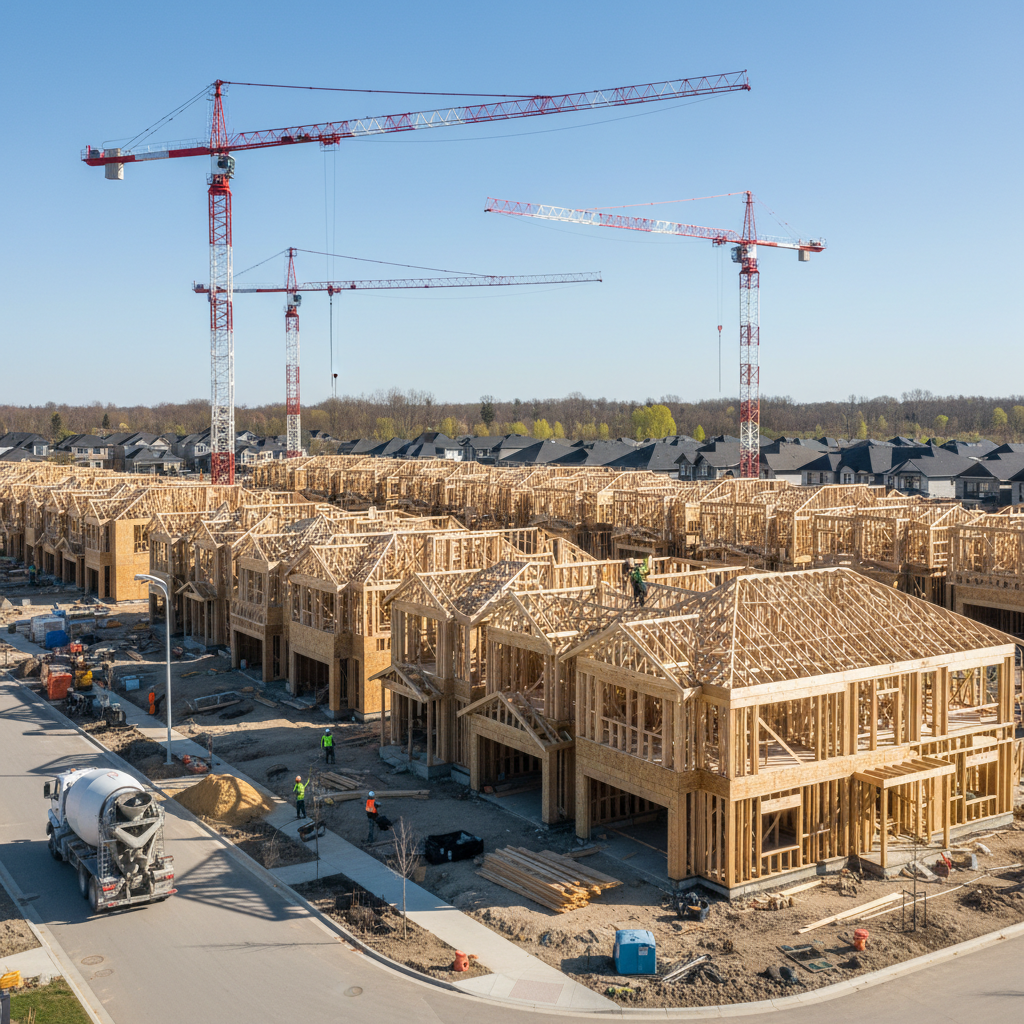
Homebuilders have become the big winners in this market. Large construction companies have deep pockets, and they are using their financial power to lure buyers away from the existing home market. Many builders are offering permanent or temporary rate buydowns. They might pay to lower a buyer’s interest rate to 5.5% for the first few years of the loan, or even for the entire 30-year term. This has made brand-new construction much more attractive than older homes.
For buyers looking at older homes, other strategies are gaining traction:
- Adjustable-Rate Mortgages (ARMs): These loans offer a lower fixed interest rate for an initial period, such as five or seven years, before adjusting to market rates. It is a gamble, but many buyers hope to refinance before the rate adjusts.
- Assumable Mortgages: Some loans, specifically government-backed FHA and VA loans, are assumable. This means a buyer can take over the seller’s existing low-rate mortgage. Finding these deals is tough, but they are highly prized.
- Aggressive Rate Shopping: Buyers are looking beyond major national banks. Local credit unions and regional banks often offer slightly lower rates or lower closing costs to win business.
What Lies Ahead?
predicting where mortgage rates will go next is a risky game. Earlier this year, many economists predicted that rates would trend down toward 6% by the summer. Those forecasts have been torn up.
For now, the housing market is likely to remain in a state of suspended animation. Buyers will have to adjust their expectations, look for smaller homes, or move to more affordable regions. Sellers will likely stay put unless they absolutely have to move. It is a challenging environment, and there is no sign of a quick fix on the horizon.