Mistrial Declared in Lindsay Clancy Triple-Murder Case
A Massachusetts judge has declared a mistrial in the high-profile case of Lindsay Clancy, the Duxbury mother accused of killing her three children.
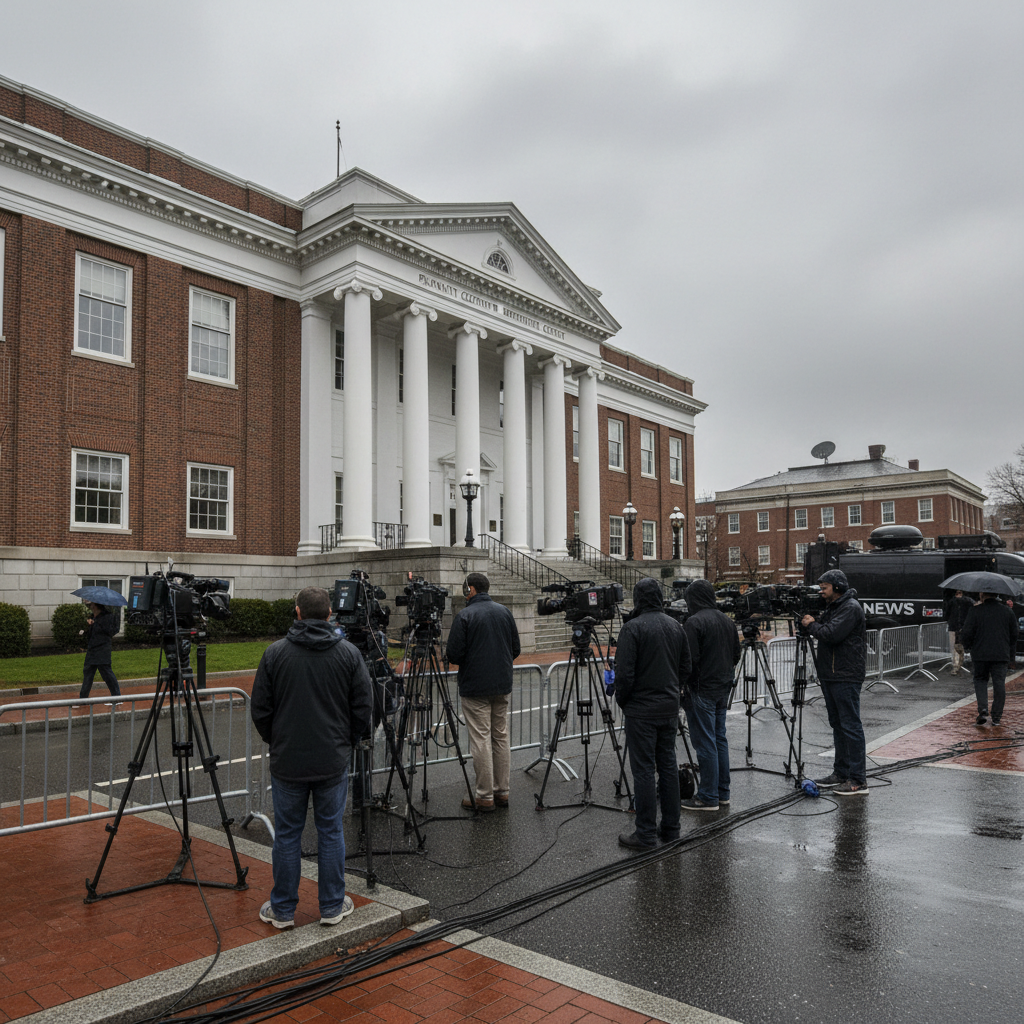
A Sudden Halt in a High-Stakes Trial
The trial of Lindsay Clancy, the Massachusetts mother accused of taking the lives of her three young children before attempting suicide, has come to an abrupt and unexpected halt. In a quiet, tense courtroom at Plymouth County Superior Court, the presiding judge declared a mistrial. This decision thrusts one of the state’s most emotionally charged legal battles into a state of profound uncertainty.
The ruling came after a series of intense, closed-door hearings. It followed a critical procedural breakdown that the court deemed too severe to salvage. According to court sources, the defense raised serious concerns after learning that several potential jurors had accidentally been exposed to highly sensitive, unredacted medical files during the initial selection process. These documents, which detailed Clancy’s private psychiatric evaluations and personal therapy notes, had not been approved for public release.
“We cannot proceed under a cloud of compromise,” the judge announced to a hushed gallery. “The defendant’s constitutional right to a fair trial by an untainted jury must be preserved. In this instance, that standard could no longer be guaranteed.”
This sudden derailment means the entire legal process must start over. The court will have to select an entirely new jury pool, and a new trial date must be scheduled. It is a major setback for both the prosecution, which spent months building a meticulous timeline of the events, and the defense, which has argued from the beginning that Clancy was in the grip of a severe, uncontrollable mental health crisis.
The Tragedy That Shattered Duxbury
To understand the weight of this mistrial, one must look back to the cold evening of January 24, 2023. Duxbury, a quiet coastal town south of Boston, was shattered by what took place inside the Clancy family home on Summer Street.
Lindsay Clancy, a 33-year-old labor and delivery nurse at Massachusetts General Hospital, was home alone with her three children: five-year-old Cora, three-year-old Dawson, and eight-month-old Callan. Her husband, Patrick Clancy, had left the house briefly to run two errands. He went to pick up a takeout dinner and grab medication from a local pharmacy. He was gone for less than an hour.

When Patrick returned, the house was silent. He found his wife lying in the backyard, seriously injured but alive after jumping from a second-story window. Inside the home, he discovered a scene of unimaginable horror. Cora and Dawson were already dead. Baby Callan was barely clinging to life; he would pass away three days later at a Boston hospital. All three children had been strangled with exercise bands.
A Legal Battle Over Postpartum Psychosis
Since the day the charges were filed, the case has sparked a intense national conversation about postpartum depression and the much rarer, more severe condition known as postpartum psychosis.
Defense attorney Kevin Reddington has built his strategy entirely around Clancy’s mental state. He argues that his client was trapped in a living nightmare of severe postpartum psychosis. In the months and weeks leading up to the tragedy, Clancy had repeatedly sought professional medical help. She had been prescribed a rapidly changing cocktail of heavy psychiatric medications, including sedatives, antidepressants, and mood stabilizers.
“This was not an act of malice,” Reddington has argued passionately. “This was a horrific, tragic consequence of a medical system that failed a mother in desperate need. She was overmedicated, she was hallucinating, and she had completely lost touch with reality.”
The defense maintains that Clancy was acting under the influence of powerful auditory hallucinations. These voices in her head, they claim, commanded her to harm her children and herself. According to Reddington, she had no control over her actions and has expressed deep, paralyzing grief since regaining clarity.
The Prosecution’s Case for Premeditation
Prosecutors, however, paint a vastly different and far more calculated picture of the events leading up to the killings.

Assistant District Attorney Jennifer Sprague argued in previous hearings that Lindsay Clancy’s actions were planned and deliberate. The state points to her phone records from that afternoon. Investigators found that Clancy had used her phone to research pediatric stool softeners, look up a local restaurant menu, and calculate the exact travel time it would take her husband to drive to the restaurant and back.
“She knew exactly how much time she had,” Sprague told the court. “She deliberately planned this errand to ensure she would be left alone with the children long enough to carry out these murders.”
The prosecution also highlighted the fact that Clancy had not mentioned hearing voices to the doctors she saw in the days immediately preceding the tragedy. To the state, her actions were those of a woman who knew exactly what she was doing and understood the wrongfulness of her conduct.
The Road Ahead and Ongoing Treatment
With the declaration of a mistrial, both sides must now regroup and prepare for a new legal battle. Clancy herself remains hospitalized. The fall from the window left her paralyzed from the waist down. She is currently being held at Tewksbury Hospital, a state psychiatric facility, where she continues to receive intensive medical and mental health treatment.
Her physical and psychiatric condition will likely complicate the scheduling of a new trial. The legal teams must now find a way to select an impartial jury in a state where media coverage of the case has been near-constant for over a year. The task will not be easy.
For the family, the waiting continues. Patrick Clancy has kept a low profile since the tragedy, though he previously published a public letter urging people to find forgiveness for his wife. He wrote about the profound love she had for her children, describing her as a kind and caring mother whose true character was entirely different from the horrors of that winter night.
The court is expected to convene again next month to discuss a new schedule for the proceedings. Until then, the case remains suspended in a painful legal limbo, leaving a community still searching for answers in the wake of an unthinkable tragedy.