Jeddah Tower Passes 1,489 Feet, Eclipsing Petronas Towers
The Jeddah Tower has reached 1,489 feet, surpassing Malaysia’s Petronas Towers as it climbs toward its final 3,281-foot target.
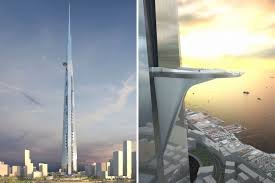
A Giant Rises in the Desert
JEDDAH, Saudi Arabia — A new giant is rising. The long-delayed Jeddah Tower project has cleared a major structural milestone. Crews working on the world’s future tallest building just pushed past a legendary architectural mark.
The tower has officially reached a height of 454 meters, or roughly 1,489 feet, across 113 completed floors. This new height pushes the building past Malaysia’s Petronas Towers. Those twin towers stood as the tallest buildings in the world back in 1998, measuring 452 meters, before eventually losing the crown to Taiwan’s Taipei 101.
Ian Norman Miller, the senior executive project director for the developer Saudi Binladin Group, shared the news on Wednesday. For Miller, the engineering milestone is deeply personal. It spans two generations of skyward ambition.
A Family Legacy in the Sky
“Thirty years ago, my father helped build the world’s tallest building,” Miller wrote in a social media post, recalling the intense push to finish the Petronas Towers in Kuala Lumpur. “I was just 16 at the time.”
Miller watched his father direct the complex concrete operations for the Malaysian icon. Decades later, he finds himself leading the team that has officially eclipsed his father’s historic work. “Today, I have the pride of celebrating our own success with my team,” Miller added.
The shift in structural supremacy represents a broader historical cycle. Bob Forest, a partner at Adrian Smith + Gordon Gill Architecture, was working in Hong Kong when the Petronas Towers first claimed the global title. That moment marked the first time the record for the world’s tallest building left the United States for Asia.
“Petronas is a building of my era,” Forest said. He remembered looking at the twin towers as a young architect, hoping he might one day work on a project of similar scale. “I guess hopes can become reality,” he remarked.
Battling the Elements at 1,400 Feet
Designing and building a structure that will eventually soar past 1,000 meters, or 3,281 feet, presents unprecedented physical challenges. The team must navigate brutal summer temperatures in Jeddah alongside highly unpredictable weather patterns.
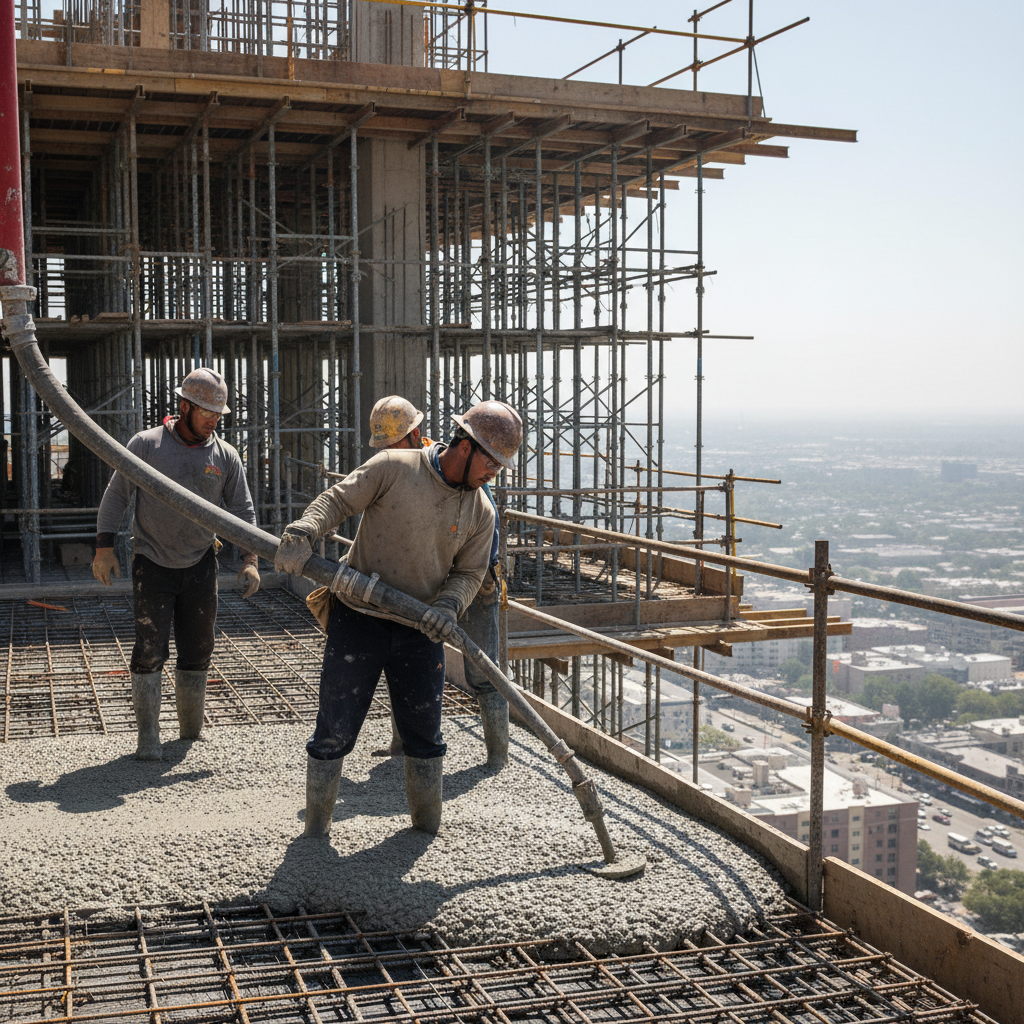
The science of pumping liquid concrete hundreds of feet into the air during desert heat waves is complex. If the mixture dries too fast, it jams the pumps. If it is too wet, the structural integrity of the columns is compromised. Engineers must continuously adjust chemical mixtures and use chilled water aggregates to keep the concrete stable.
At these extreme heights, wind is the ultimate master. Forest explained that despite modern climate modeling, the daily weather dictates the construction schedule. High-speed winds can halt work instantly.
“Our profession is both an art and a science, but we all answer to Mother Nature,” Forest said. “You can be up there pouring concrete one afternoon and need to stop and secure the construction site that evening as the weather rolls in.”
The Race for Height and Innovation
The Jeddah Tower is designed by architects Adrian Smith and Gordon Gill. Smith is no stranger to the clouds. He designed Dubai’s Burj Khalifa, the current world record holder at 2,717 feet, during his time with the architectural firm Skidmore, Owings & Merrill.
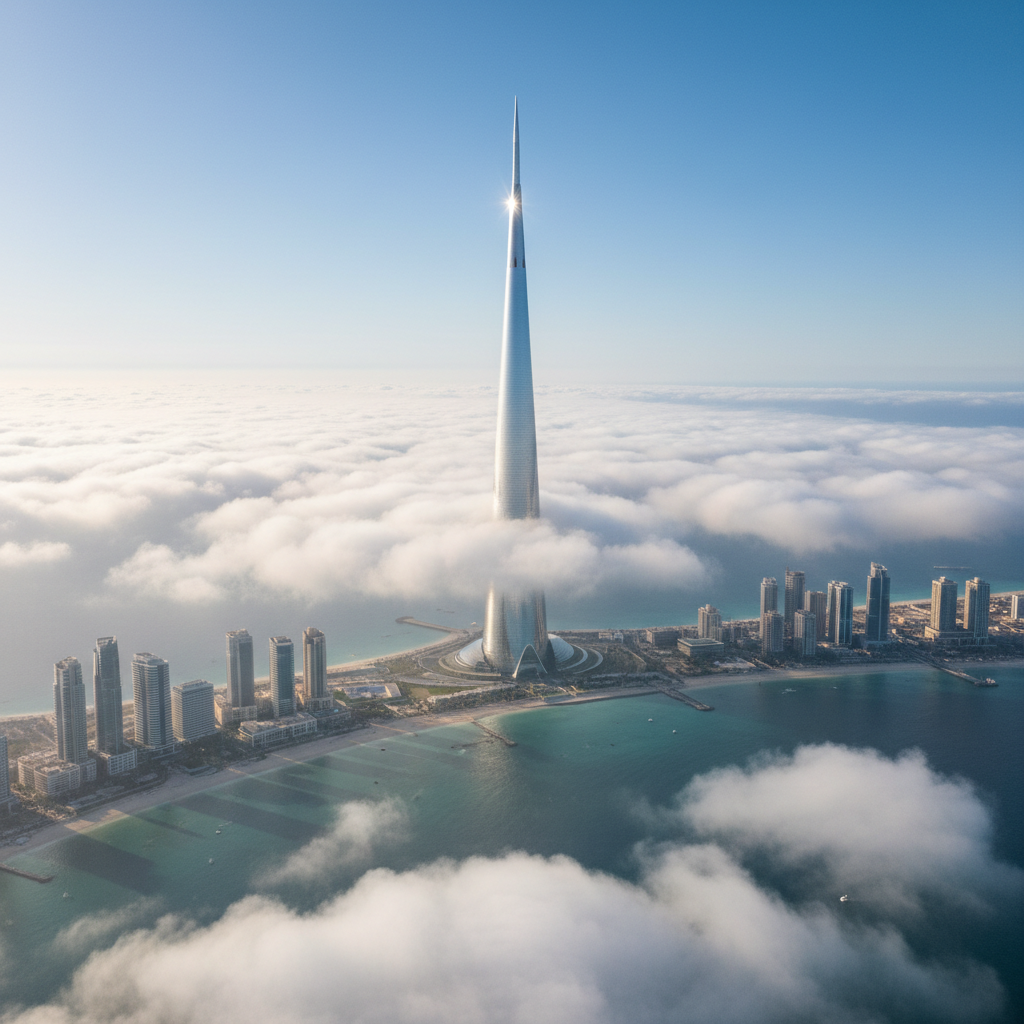
Once finished, the Jeddah Tower will easily clear the Burj Khalifa by more than 500 feet. The tower’s aerodynamic, three-sided design is built specifically to handle high-altitude wind loads, mimicking the natural shape of a sprouting desert plant.
The global push for vertical innovation continues to accelerate elsewhere. In the United States, developers are looking toward sustainable materials with Bevel, a proposed tower designed to become the tallest mass timber office building in the country. Meanwhile, China’s long-delayed Tianjin 117 Tower is nearing completion after 18 years, recently announcing plans to feature the highest elevator in a building.
A Vision Scheduled for 2028
The Jeddah Tower project has faced years of delays, political transitions, and financial restructuring. The revival of the site is seen by global real estate analysts as a major statement of economic confidence from Saudi Arabia as the Kingdom attempts to diversify its economy away from oil.
The construction team has spent months optimizing logistics and testing new engineering strategies to boost daily productivity. According to Forest, those efforts are paying off. The project remains on schedule for its planned completion in August 2028.
More milestones are already on the horizon. Forest revealed that two other major height benchmarks are coming up next. As the concrete continues to rise in the desert, the global construction industry is watching to see if human engineering can successfully cross the historic 1,000-meter threshold.
