Stranded at Sea: Four Divers and Their 15-Hour Fight for Life
Four divers swept away in the Atlantic share their grueling fifteen-hour struggle against sharks, jellyfish, and the dark ocean.
The sun was high, and the ocean looked deceptively calm. On a warm Sunday afternoon in August, four experienced divers plunged into the Atlantic Ocean, roughly 46 miles off the coast of Cape Fear, North Carolina. It was supposed to be a routine deep-sea dive to explore a popular underwater wreck. Instead, it became a fifteen-hour fight for survival against the vast, indifferent wilderness of the open ocean.
Daniel Williams, his stepfather Evan Williams, Ben Wiggins, and Luke Thompson expected a challenging but manageable afternoon. They were comfortable in the water. But the Atlantic Ocean has its own rules. When they surfaced after their dive, the pleasure craft they had arrived on—the Sea Ghost—was nowhere to be seen. A fierce, relentless current had dragged them miles away from their entry point in a matter of minutes.
The Realization of Absolute Isolation
Imagine looking out at a 360-degree horizon of water and seeing nothing. No land. No sails. Not even the silhouette of the vessel that brought you there. The boat had vanished beyond the swell.
They tried to swim. They kicked hard, aiming for where they thought the boat might be. But the current was too powerful. It swept them further out, draining their energy with every stroke. They quickly realized that fighting the ocean was a losing battle. To survive, they had to conserve their strength.
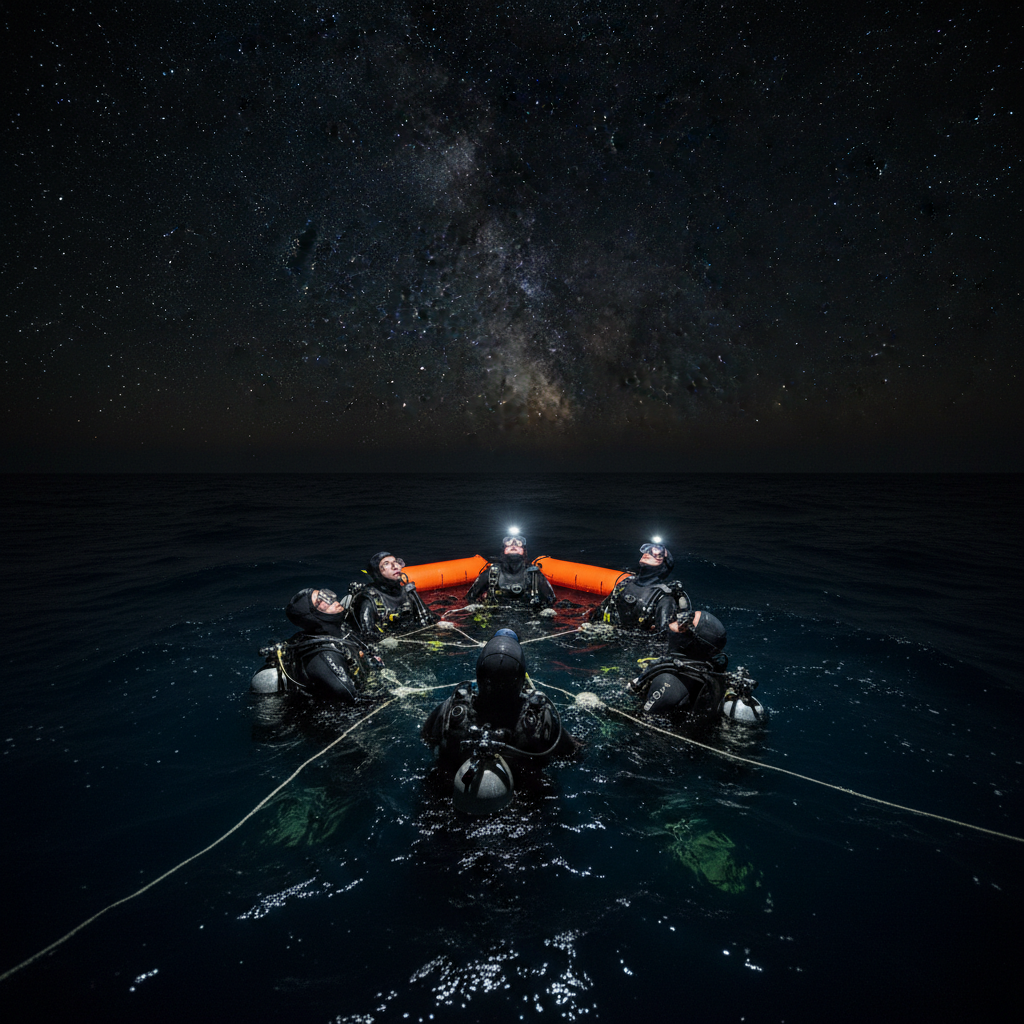
They made a crucial decision. They gathered close and used their dive buoys and safety lines to tie themselves together. If they drifted, they would drift as one. It was a choice that ultimately kept them alive, but it did not make the unfolding nightmare any easier to bear.
To stay afloat without exhausting themselves, they had to make a painful sacrifice. They ditched their heavy scuba tanks. They inflated their buoyancy control devices to the maximum and slipped out of the heavy steel cylinders, watching them sink into the abyss. It made them lighter and kept them buoyant, but it also stripped them of their gear, leaving them feeling naked and exposed in the middle of the sea.
The Pitch-Black Night and the Terrors of the Deep
As afternoon bled into evening, the sun dipped below the horizon. The temperature began to drop. Even in their wetsuits, the constant immersion began to leach the heat from their bodies. Hypothermia was no longer a distant threat; it was a creeping reality. Dehydration set in rapidly. The salty mist stung their eyes and cracked their lips, making every breath feel like sandpaper.
Then came the dark.
Night in the open ocean is a different kind of blackness. There are no streetlights, no ambient city glow. There is only the starlight above and an infinite, ink-black void below. Every movement in the water beneath them triggered a primal panic. They knew what shared those waters.
“You feel things brushing against your legs,” Luke Thompson later recalled. “You know what’s out there. You just try your best not to think about it.”
The waters off the North Carolina coast are known territory for massive predators, including tiger sharks and great whites. Every splash, every ripple in the dark felt like an impending attack. But the phantom fear of sharks was not the only physical torture they faced. Real, tangible pain arrived in the form of jellyfish. Swarms of sea nettles drifted through their huddle. The stings were constant—sharp, burning needles of pain across their exposed skin that they were completely powerless to avoid.
As the hours dragged on, exhaustion began to warp their minds. Hallucinations teased their eyes. They saw phantom boat lights on the horizon, only for the mirages to vanish when they blinked. They were cold, shivering violently, and losing hope.
It was during these desperate hours of darkness that the sheer weight of their situation hit them. One of the men looked at his companions through the pitch-black and uttered the words that had been echoing in all of their minds: “I don’t want to die this way.”
It was not a cry of surrender. It was a raw, honest acknowledgement of their vulnerability. They were completely at the mercy of the elements, drifting further into the shipping lanes of the Atlantic.
The Rescue Mission Mobilizes
While the four men fought to stay together in the dark, a massive rescue operation was spinning into motion on land. When the captain of the Sea Ghost realized the divers had not surfaced near the boat and were lost, he frantically radioed the U.S. Coast Guard. The response was immediate.
The Coast Guard launched an expansive search-and-rescue grid. They mobilized:
- A C-130 Hercules aircraft from Coast Guard Air Station Elizabeth City
- An ocean-going Coast Guard cutter
- Multiple search-and-rescue boats from local coastal stations
- Helicopter crews equipped with night-vision technology
Searching for four human heads in thousands of square miles of open ocean is an almost impossible task. It is like looking for a handful of dark corks in a shifting, turbulent desert. The Coast Guard Sector North Carolina command center worked tirelessly to calculate drift patterns. They used sophisticated computer modeling that factors in wind speed, water temperature, and the powerful, sweeping movements of the Gulf Stream.
As the clock ticked past midnight, the tension in the rescue coordination center grew. Every hour in the water decreased the divers’ chances of survival. The human body can only shiver for so long before exhaustion leads to drowning.
The Morning Light and a Life-Saving Speck
Dawn broke on Monday morning. The rising sun brought a welcome touch of warmth, but it also revealed the terrifying scale of their isolation. They had drifted dozens of miles overnight. They were shivering, exhausted, and incredibly weak.
Then, the sound of a distant engine broke the rhythmic slapping of the waves.
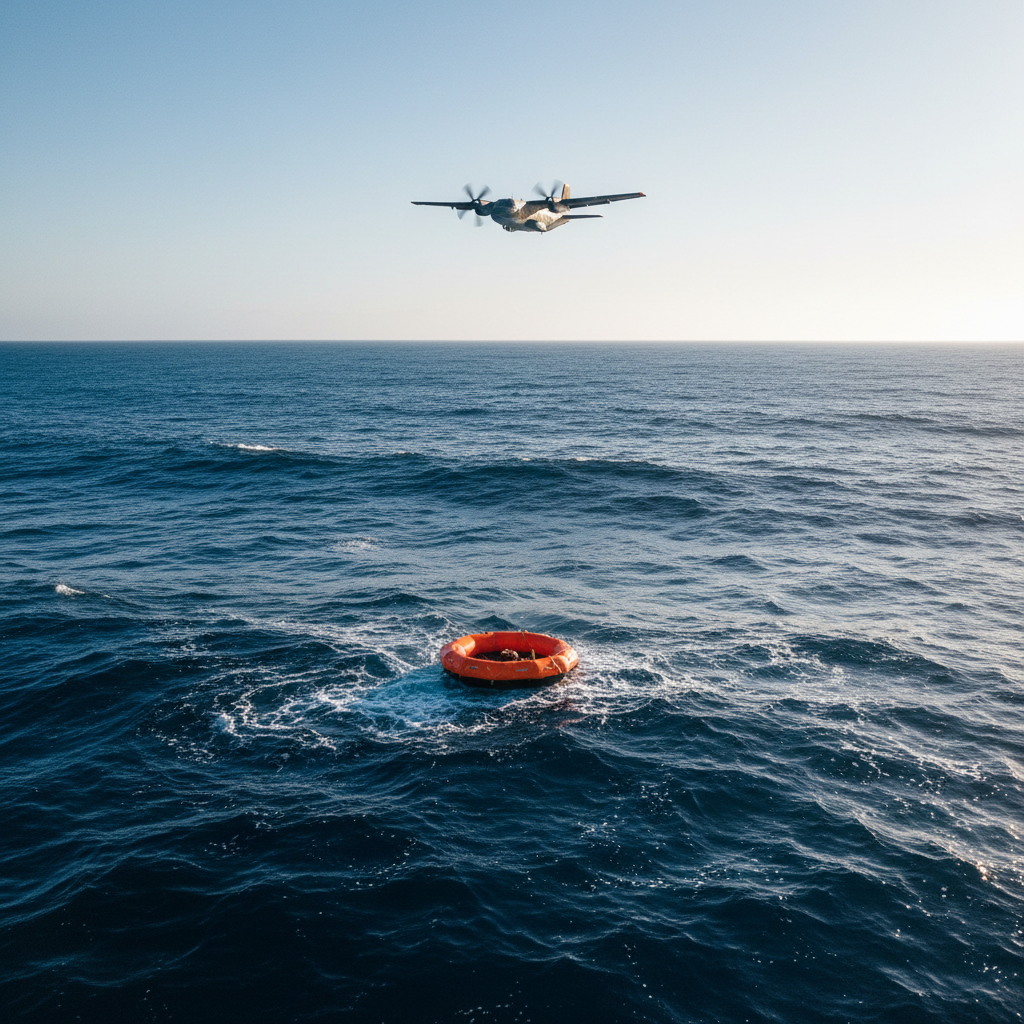
High above, the Coast Guard C-130 Hercules was flying systematic search grids. The crew was scanning the water with specialized binoculars and radar equipment. In the water, the four men saw the aircraft. They splashed. They waved their bright orange safety tubes. They screamed, even though they knew the roar of the plane’s engines would drown out their voices.
Inside the cabin of the C-130, a sharp-eyed watchstander spotted a tiny flash of color. It was a momentary break in the uniform blue-gray pattern of the ocean waves.
The plane circled back. The crew prepared to drop emergency equipment. From the rear cargo ramp, a large canister plunged into the ocean. It hissed as it hit the water and instantly inflated into a bright orange life raft, drifting just a few hundred yards from the stranded men.
Using the absolute last reserves of their strength, the four divers swam toward the raft. Climbing in was an agonizing struggle. Their muscles were cramped and unresponsive after fifteen hours of suspension in the ocean. But they helped each other. One by one, they hauled themselves over the inflatable tubes.
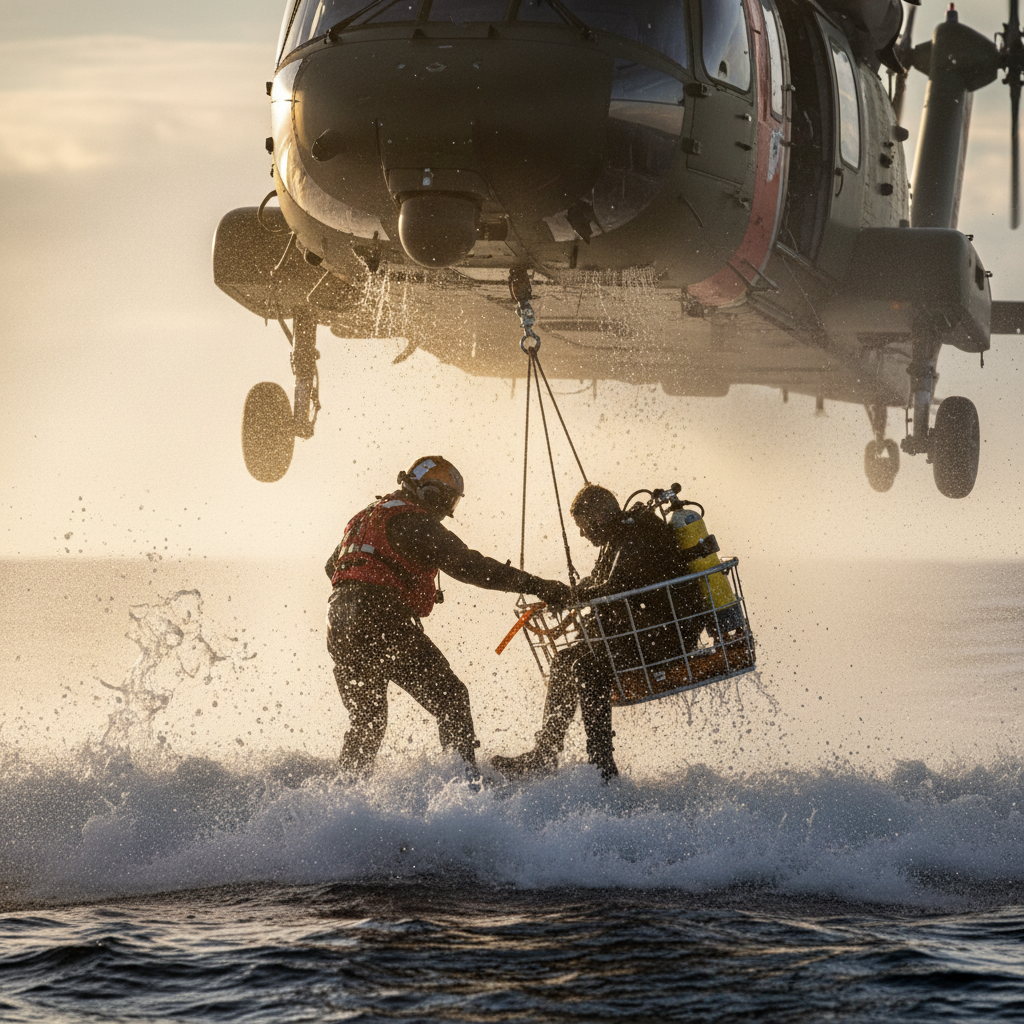
Inside the raft, they collapsed. They were out of the water, but they still needed extraction. A Coast Guard helicopter was immediately dispatched to their exact coordinates. One by one, the men were hoisted up into the vibrating cabin of the chopper.
“When that basket came down, it felt like a miracle,” Evan Williams said later. “We knew we were going home.”
They were flown to a local hospital, suffering from severe dehydration, sunburn, jellyfish stings, and extreme exhaustion. Miraculously, they had survived without any life-threatening injuries.
The Bond of Survival
Looking back on the ordeal, the survivors know how close they came to a tragic end. They point to several key decisions that kept them alive:
- Staying Together: By tying themselves together, they prevented the current from separating them, making them a much larger target for searchers to spot.
- Ditching Heavy Gear: Shedding their heavy scuba tanks saved vital energy that would have been wasted trying to stay afloat.
- Using High-Visibility Gear: Having bright safety tubes and dive buoys allowed the C-130 crew to spot them against the vast ocean backdrop.
“If we hadn’t stayed together, we wouldn’t have made it,” Daniel Williams reflected. “The mental strength you get from looking the guy next to you in the eye and seeing he’s still fighting—you can’t underestimate that.”
Their story is a sobering reminder of the ocean’s power. Even for experienced divers, things can go wrong in a heartbeat. Safety gear, emergency beacons, and above all, the discipline to remain calm and united, are what stand between life and death when the shore disappears.
