The Venezuelan Tycoon, Rudy Giuliani, and the White House Backchannel
Inside the federal money-laundering probe of Alejandro Betancourt and his high-stakes effort to lobby the Trump administration.

An Unlikely Gathering at a Spanish Castle
In August 2019, a private jet landed in Spain, carrying Rudy Giuliani, the personal attorney to then-President Donald Trump. Giuliani was not there for a typical vacation. His destination was El Alamín, a sprawling, castle-like estate outside Madrid owned by Alejandro Betancourt López, a wealthy young Venezuelan businessman. The estate, complete with its own hunting grounds and manicured gardens, served as the backdrop for a meeting that would soon draw the attention of federal prosecutors in Miami.
Betancourt was in serious trouble. He was under investigation by the U.S. Department of Justice for his role in a massive $1.2 billion money-laundering scheme involving Venezuela’s state-owned oil company, Petróleos de Venezuela, S.A., better known as PDVSA. Seeking a way out, the Venezuelan tycoon turned to one of the most politically connected lawyers in America. The alliance between a wealthy Venezuelan often described as a ‘bolichico’—a member of the young elite who grew rich under the socialist regimes of Hugo Chávez and Nicolás Maduro—and Trump’s closest legal advisor highlights the complex intersection of private legal defense and political influence.
The Rise of the ‘Bolichicos’
To understand why federal authorities were so interested in Betancourt, you have to look back at the collapse of Venezuela’s infrastructure. In the late 2000s, the country suffered from chronic, devastating electricity blackouts. In response, the government handed out billions of dollars in no-bid contracts to build new power plants. Among the biggest beneficiaries was Derwick Associates, a company co-founded by Betancourt and his associates when they were only in their late twenties.
Derwick had no prior experience in the energy sector. Yet, the company secured a dozen lucrative contracts worth billions. U.S. investigators later alleged that Derwick overcharged the Venezuelan government by hundreds of millions of dollars, purchasing used turbines and selling them at heavily inflated prices. Much of that money, prosecutors claimed, was funneled out of Venezuela through a complex network of offshore companies, eventually landing in luxury real estate in Spain, New York, and Florida, as well as secret Swiss bank accounts.

The financial maneuver was stunningly simple but highly lucrative. By exploiting Venezuela’s dual-rate currency exchange system, individuals with access to government officials could convert cheap local currency into U.S. dollars at highly favorable official rates, instantly multiplying their wealth. Federal prosecutors in Miami began tracking these funds, launching a major investigation code-named Operation Money Flight.
The Miami Probe and ‘Conspirator 2’
Operation Money Flight resulted in the indictment of several high-profile Venezuelan officials and financial fixers in 2018. The court documents detailed how hundreds of millions of dollars in bribes were paid to Venezuelan officials to secure access to the lucrative currency exchange schemes. While Betancourt was not publicly named in the initial indictments, sources close to the investigation confirmed that he was the individual referred to in court filings as ‘Conspirator 2.’
The pressure was mounting. Miami federal prosecutors were building a case that could have resulted in Betancourt’s arrest and extradition. He needed a legal shield, and he needed it fast. That is when his legal team made the strategic decision to hire Giuliani. The move was calculated to bypass the standard judicial bureaucracy and appeal directly to the political leadership of the Department of Justice.
Lobbying the Department of Justice
Within weeks of the meeting at the Spanish estate, Giuliani was back in Washington, actively lobbying the Justice Department on Betancourt’s behalf. In September 2019, Giuliani took the unusual step of meeting with Brian Benczkowski, the head of the DOJ’s Criminal Division, along with several other government attorneys. During the meeting, Giuliani argued that Betancourt should not be prosecuted, claiming that the Venezuelan businessman had provided invaluable, secret assistance to U.S. interests and was working to help facilitate the transition of power in Venezuela away from Nicolás Maduro.
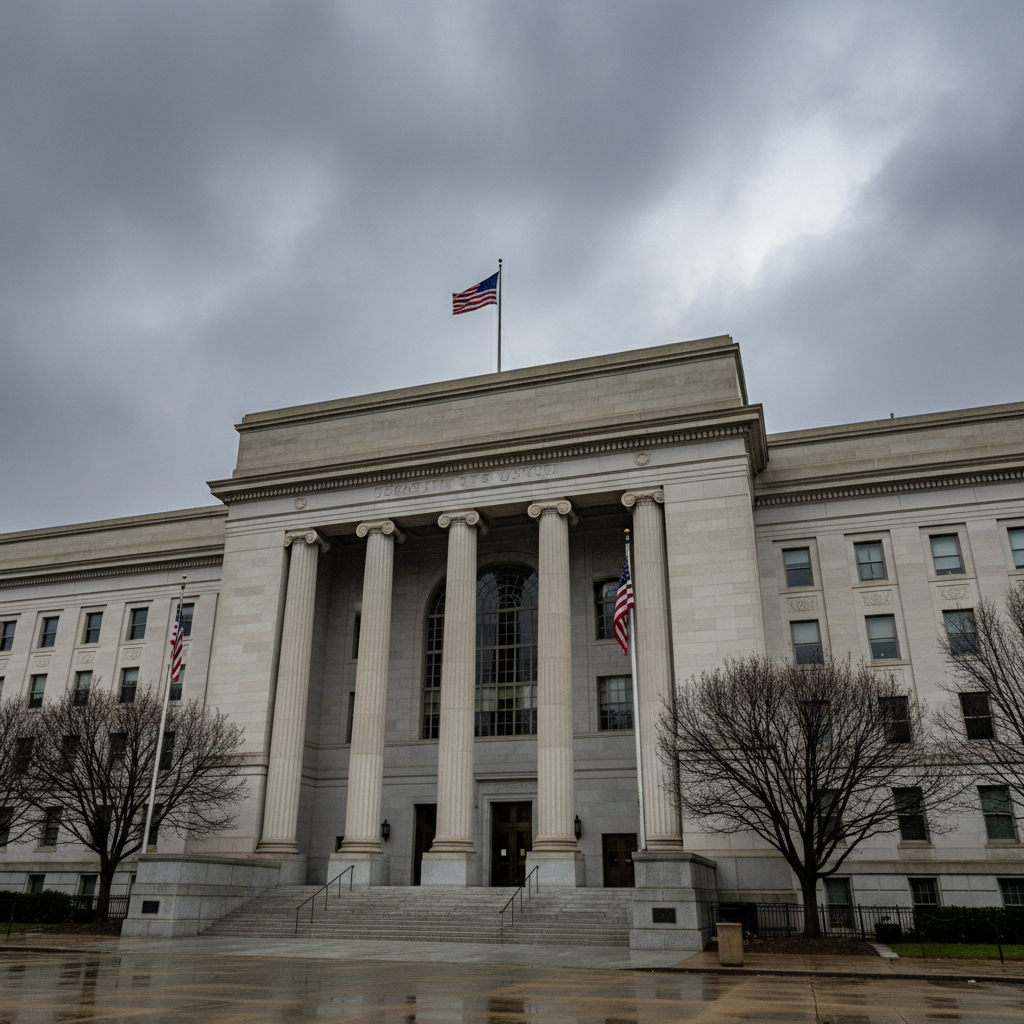
The meeting shocked career prosecutors in South Florida. They had spent years building a meticulous financial case against Betancourt and his associates. To them, the intervention by the President’s personal attorney felt like a direct threat to the independence of their investigation. It raised serious questions about whether wealthy foreign targets could purchase political access to evade justice.
Despite Giuliani’s efforts, the career prosecutors in Miami refused to back down. They continued to gather evidence, trace bank transactions, and interview cooperating witnesses who had pleaded guilty in connection with the money-laundering scheme.
The Ukrainian Connection
The relationship between Betancourt and Giuliani was not just about legal defense in Washington. It also overlapped with Giuliani’s political activities in Europe. At the time of their meeting in Spain, Giuliani was deeply involved in an effort to dig up political dirt on Joe Biden and his son, Hunter, ahead of the 2020 U.S. presidential election. This effort was central to the first impeachment inquiry against Donald Trump.
Reports later surfaced suggesting that Betancourt may have helped fund some of Giuliani’s foreign travels and political operations during this period. Associates of Giuliani, including Lev Parnas and Igor Fruman—who were later convicted of campaign finance violations—were also connected to the broader network of individuals operating around Betancourt. This web of relationships suggested a transactional exchange: Betancourt provided resources and political connections, while Giuliani offered direct access to the highest levels of the American government.
The Current State of Play
Years have passed since that meeting in Spain, but the legal and political ramifications continue to ripple through Washington and Miami. While Betancourt has consistently denied any wrongdoing, maintaining that his business dealings were entirely legitimate and that he was a successful entrepreneur who helped address Venezuela’s energy crisis, the federal files remain open.
The saga serves as a vivid case study of how global finance, corruption, and domestic American politics can become deeply intertwined. For federal investigators, the case remains a test of the Justice Department’s ability to pursue complex international corruption cases, regardless of the political connections of those under scrutiny. For the public, it offers a rare, behind-the-scenes look at how the wealthy and powerful attempt to navigate the global justice system when the stakes are at their absolute highest.