Trump Legal Cases: What Happens to the Charges Now?
With Donald Trump returning to the White House, his historic criminal cases are grinding to a halt. Here is where each legal battle stands.
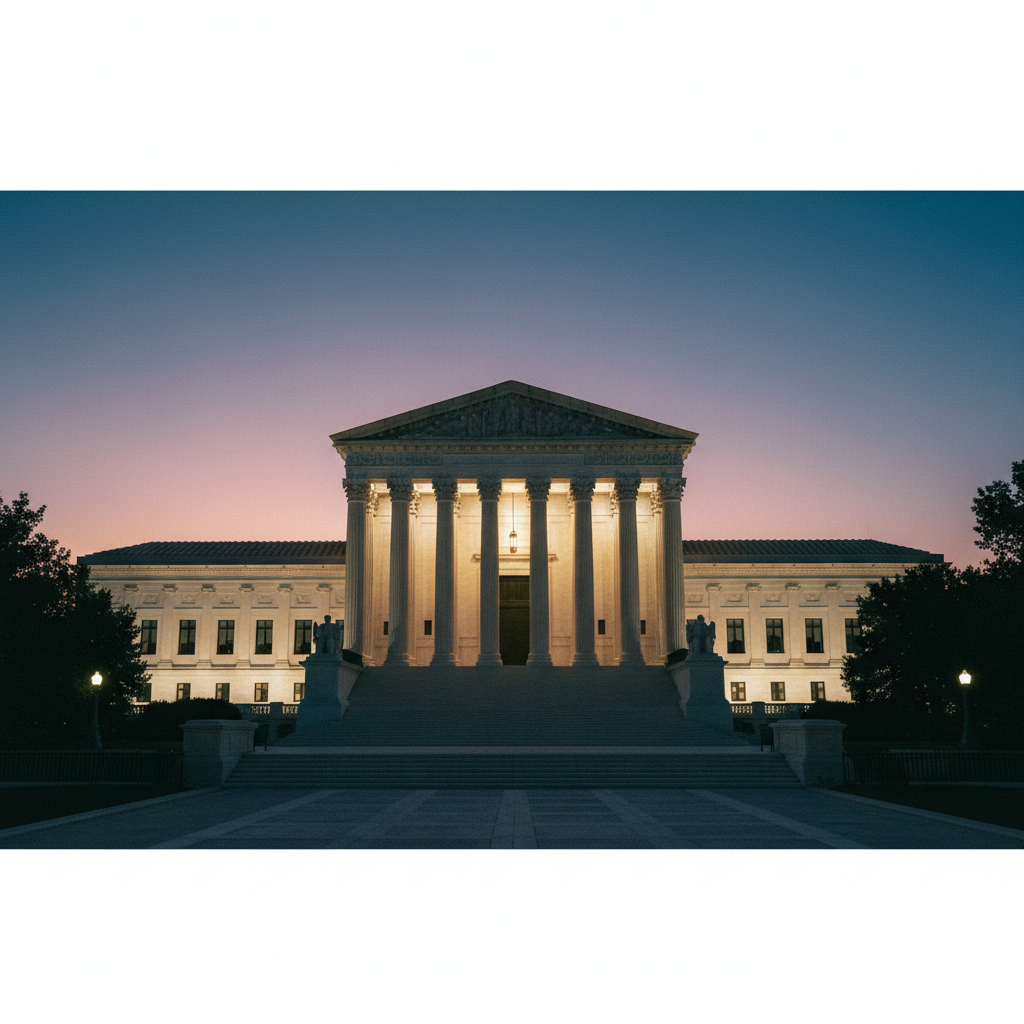
The Ultimate Delay Strategy Succeeds
It was a legal strategy built almost entirely on delay, and in the end, the calendar won. Donald Trump’s victory in the 2024 presidential election did not just secure him a second term in the Oval Office. It effectively dismantled the mountain of state and federal criminal charges that had threatened to define his post-presidency. Never before has a criminal defendant won the highest office in the United States. His victory created a constitutional puzzle that American courts, prosecutors, and defense attorneys are now scrambling to solve.
For over a year, Trump faced 88 criminal charges across four separate indictments. Today, those cases are collapsing one by one. The federal cases are dead. The state-level prosecutions are frozen in place, likely to remain asleep until at least 2029. The swift resolution that prosecutors once promised has vanished, replaced by the practical realities of presidential immunity and federal policy.
The Federal Cases: Jack Smith Steps Aside
Special Counsel Jack Smith’s appointment in late 2022 was supposed to ensure a fast, independent resolution to the twin federal investigations into Trump. One case focused on the effort to overturn the 2020 election; the other involved the hoarding of classified documents at the Mar-a-Lago estate. Instead, Smith ran into a wall of procedural delays, a landmark Supreme Court ruling on presidential immunity, and eventually, the ultimate hard stop: Election Day.
On November 25, 2024, Smith made it official. He asked U.S. District Judge Tanya Chutkan to dismiss the election interference charges in Washington, D.C., without prejudice. He took a similar step in the classified documents case in Florida, dropping his appeal of Judge Aileen Cannon’s earlier decision to dismiss the indictment.
Smith’s hands were tied. The decision had nothing to do with the strength of the evidence. Rather, it was dictated by a fifty-year-old policy within the Department of Justice. Originating during the Nixon administration in 1973 and reaffirmed during the Clinton era in 2000, the Office of Legal Counsel guidelines are clear: a sitting president cannot face criminal prosecution. To try or imprison a commander-in-chief would disable the executive branch and prevent the government from functioning.
Because Trump won the election, he was destined to control the very Justice Department prosecuting him. Had Smith not dropped the cases, Trump’s incoming Attorney General would have done so on day one. By taking the initiative, Smith preserved the department’s independence, even as he acknowledged the inevitable. The federal prosecutions are over.
The New York Conviction: A Courtroom in Limbo
While the federal charges are gone, the state-level cases are far more complicated. Under the U.S. Constitution, a president cannot pardon himself for state-level crimes, nor can he order a local district attorney to drop charges. This makes the situation in New York uniquely volatile.
In May 2024, a Manhattan jury convicted Trump on 34 felony counts of falsifying business records. The charges stemmed from a scheme to buy the silence of adult film actress Stormy Daniels ahead of the 2016 presidential election. It was a historic moment, marking the first time a former U.S. president had been convicted of a felony.
Now, Justice Juan Merchan faces an unprecedented dilemma. Trump’s sentencing, originally scheduled for July, was postponed multiple times. Trump’s defense team, led by Todd Blanche and Emil Bove, argues that the conviction itself must be overturned. They point to the Supreme Court’s July ruling on presidential immunity, which shielded a president’s official acts from prosecution. The defense argues that some of the evidence presented at the Manhattan trial involved official acts from Trump’s first term, thereby tainting the entire verdict.
Manhattan District Attorney Alvin Bragg has proposed a different path. Recognizing that sentencing a president-elect to prison or probation is a constitutional impossibility, Bragg’s office suggested freezing the entire case. Under this proposal, the conviction would stand, but all legal proceedings, including sentencing, would be paused until Trump leaves office in 2029.
Trump’s lawyers are fighting this delay. They want an immediate dismissal, arguing that even the existence of the conviction interferes with Trump’s ability to govern. Judge Merchan must now decide whether to freeze the case, dismiss it entirely, or take the highly risky step of attempting to hand down a sentence before Inauguration Day.
The Georgia Case: Stalled in Atlanta
Down in Georgia, the massive racketeering case against Trump and several co-defendants was already on life support long before voters headed to the polls. Fulton County District Attorney Fani Willis had secured a sweeping indictment charging Trump and 18 others with attempting to subvert the 2020 election results in the state.

However, the prosecution derailed in early 2024 over revelations of a romantic relationship between Willis and her lead special prosecutor, Nathan Wade. The defense team seized on the affair, demanding Willis’s disqualification. Wade resigned, but the damage was done. The Georgia Court of Appeals took up the issue of whether Willis could remain on the case, pausing all trial court proceedings in the process.
Now, Trump’s election victory has effectively ended the Georgia prosecution for the foreseeable future. Constitutional experts agree that the Supremacy Clause of the U.S. Constitution prevents state authorities from prosecuting, trial-testing, or punishing a sitting federal official. A local district attorney cannot drag the President of the United States into a state courtroom.
While the case against Trump’s co-defendants, such as Rudy Giuliani and Mark Meadows, could theoretically continue, the case against Trump himself is frozen. It will likely sit in a filing cabinet in Atlanta until 2029. By then, the political and legal landscape will have shifted so dramatically that reviving the prosecution may be nearly impossible.
What This Means for the Rule of Law
The collapse of these criminal cases has ignited a fierce national debate about accountability and the limits of executive power. The swift resolution of these legal battles proves that the American presidency is the ultimate legal shield. For Trump’s critics, the outcome is a deeply discouraging sign. They argue that it establishes a dangerous precedent: that a political candidate can escape criminal accountability simply by winning an election. They believe the justice system failed to prove that no one is above the law.
On the other side, Trump’s supporters view the end of the prosecutions as a total vindication. They have long maintained that the charges were politically motivated, designed to interfere with Trump’s campaign. From their perspective, the American electorate acted as the ultimate jury on November 5, delivering a verdict that rendered the courtroom dramas irrelevant.
In the end, the American legal system, designed to move slowly, carefully, and deliberately, was simply outpaced by the high-speed currents of modern politics. The courts could not resolve these unprecedented questions fast enough to beat the voters to the ballot box. As a result, the criminal cases that once threatened to send Donald Trump to prison have dissolved, leaving him with a clear path back to the presidency.
