Houthi Ground Offensive Targets Strategic Red Sea Strait
Yemen’s Houthis launch a fresh ground offensive toward the Bab al-Mandab Strait, threatening global shipping from the mainland.
For months, the world watched the Red Sea through the lens of high-tech naval warfare. US destroyers intercepted drone swarms, attack helicopters patrolled the shipping lanes, and merchant vessels burned after missile strikes. But inland, away from the waves, a much older and deadlier conflict is heating up. Yemen\’s Houthi rebels are pushing hard on the ground, aiming directly for the coast overlooking the Bab al-Mandab Strait.
This is not just a skirmish over dusty hills. If the rebels capture the high ground in southwestern Yemen, they will no longer need expensive ballistic missiles to threaten international trade. They could do it with standard field artillery.
The Fight for the Heights
Military sources in Yemen confirm that ground fighting has flared up with new intensity. The primary battlefields are in the rugged mountains of Taiz and Lahj provinces. These heights look down directly onto the coastal plains that lead to the Bab al-Mandab, the narrow gateway connecting the Red Sea to the Gulf of Aden.
Local commanders say the Houthis have been funneling reinforcements to the front lines for weeks. Heavy artillery shelling has resumed after a long, uneasy lull. Infantry units are testing the defensive lines of the internationally recognized government and its allies. The clashes are some of the most violent seen since a UN-brokered truce faded into a stalemate over two years ago.
The target of this push is clear: control of the ridges. From these vantage points, anyone with a medium-range artillery piece can command the waters below. It is a terrifying prospect for global shipping firms that are already routing vessels around the southern tip of Africa to avoid the danger zone.
A Changing Battlefront
For years, the western coast of Yemen was relatively stable. A coalition of anti-Houthi forces, known as the Joint Forces and led by Tareq Saleh, the nephew of Yemen\’s late president, held the strategic port city of Mocha and the surrounding plains. They acted as a buffer, keeping the rebels away from the strait.
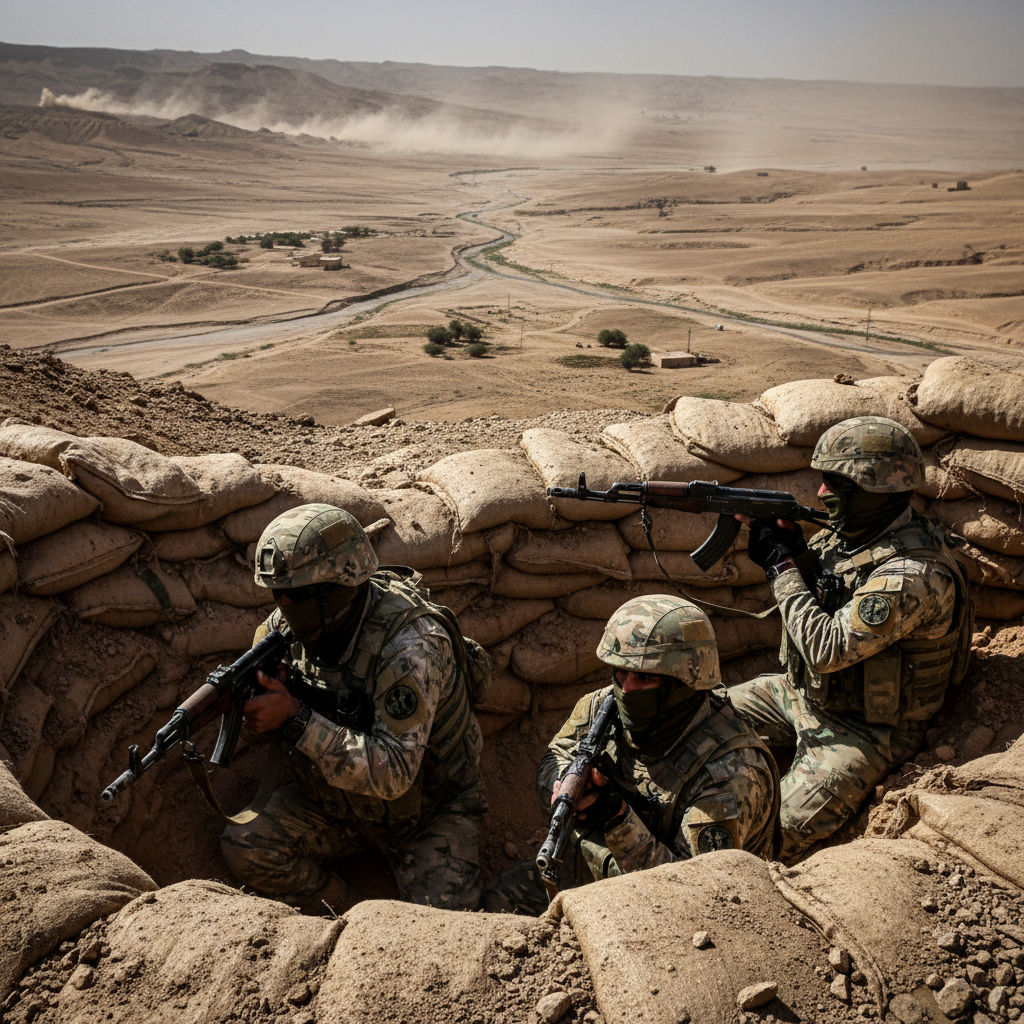
Now, that buffer is under immense pressure. Houthi fighters are using drone strikes to soften up defensive positions before launching ground assaults. They have also deployed snipers along key mountain passes to paralyze troop movements. Government forces have responded with their own artillery barrages, but they are stretched thin across a sprawling frontline.
\”They aren\’t just probing our lines anymore,\” a local military officer from the Southern Transitional Council (STC) said, speaking on the condition of anonymity. \”They are trying to break through to the sea. If they take the Al-Ahyuq or Al-Wazi\’iyah districts, they will have a straight shot to the coast. We are fighting with what we have, but the pressure is building every day.\”
The Shipping Chokepoint
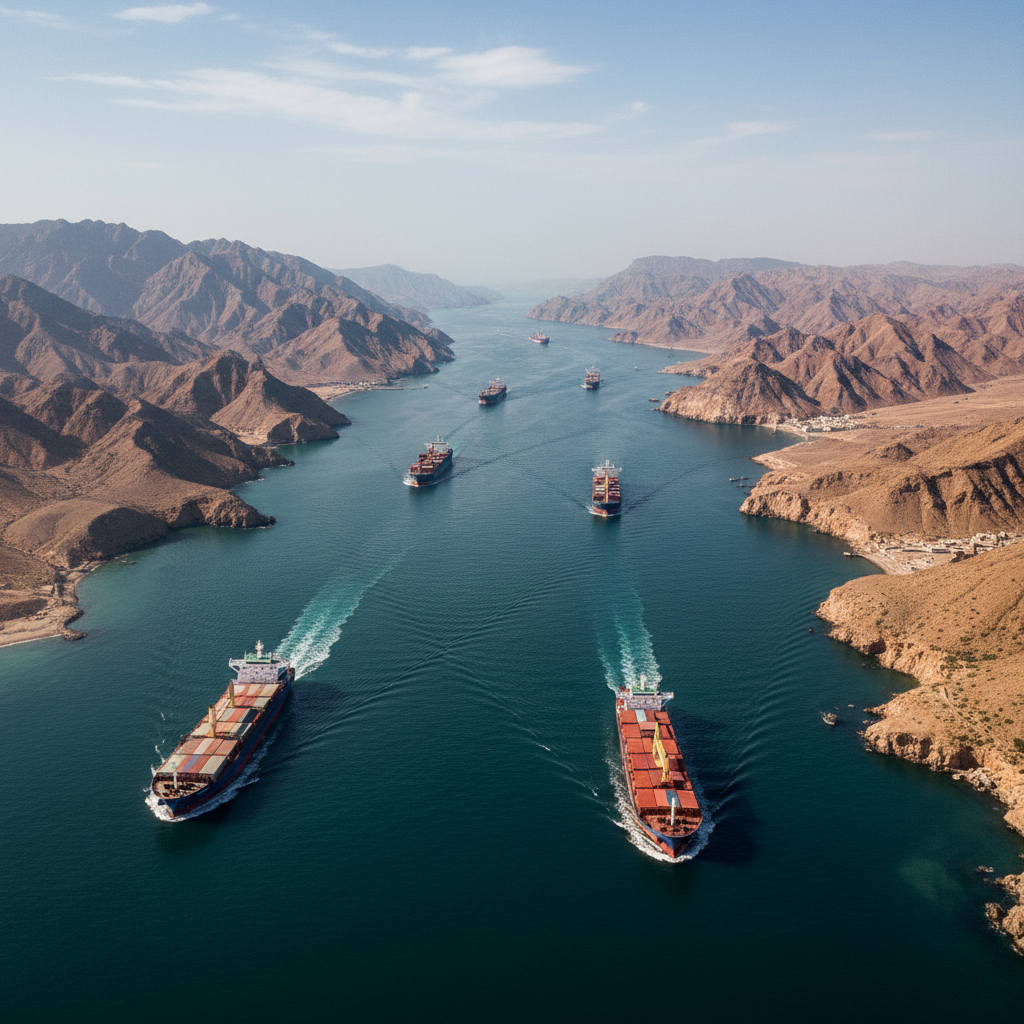
The Bab al-Mandab Strait is barely 18 miles wide at its narrowest point. About 12 percent of global trade, including millions of barrels of oil and liquefied natural gas, passes through this bottleneck daily. It is the jugular vein of Eurasian trade.
If the Houthis secure a permanent military presence on the coastal heights, the international naval mission, Operation Prosperity Guardian, faces a much more complicated task. Intercepting a missile fired from deep inside Yemen is one thing. Protecting ships from constant, short-range artillery fire from the shore is almost impossible.
Maritime security analysts warn that a Houthi breakthrough on land would fundamentally change the calculations for shipping companies. Many who are still risking the Red Sea route would likely abandon it entirely. The economic fallout would ripple across Europe and Asia, driving up shipping costs and fueling inflation once again.
Splintered Defenses
One of the biggest advantages for the Houthis is the fractured nature of their opponents. The anti-Houthi coalition is a fragile alliance of convenience. It includes the Saudi-backed government forces, the UAE-supported Southern Transitional Council, and independent local militias. While they share a common enemy, they often clash over political influence and territory.
These divisions have made coordinating a unified defense difficult. The Houthis, under the centralized command of Abdul-Malik al-Houthi, are exploiting these cracks. They have concentrated their forces on specific sectors, forcing the divided government troops to scramble for reinforcements.
The political cost of this offensive is also high. UN efforts to revive peace talks are effectively dead. Regional mediators, particularly Oman and Saudi Arabia, had hoped to turn the long-standing truce into a permanent ceasefire. But as long as the ground war escalates, those hopes remain out of reach.
The Humanitarian Toll
As the fighting intensifies, local communities are paying the price. Villages in Taiz and Lahj that had enjoyed a brief period of relative peace are now back in the line of fire. Families are packing up what few belongings they have and fleeing toward the coast, adding to Yemen\’s massive population of internally displaced people.
Hospitals in the area are already overwhelmed. They lack basic medical supplies, clean water, and fuel for generators. The influx of wounded soldiers and civilians has pushed the local healthcare system to the brink of collapse.
Aid agencies warn that if the fighting reaches the major highways connecting Taiz to the southern port of Aden, vital supply routes will be cut off. This would trigger a fresh humanitarian crisis in a country where millions already rely on international aid to survive.
What Comes Next?
The coming weeks will be critical. If the government forces can hold the mountain passes, the Houthi offensive may lose momentum, forcing them back into a war of attrition. But if the rebels find a weak spot and break through to the lowlands, the geopolitical map of the region will be redrawn.
Western powers are watching the situation closely. While US and British airstrikes have targeted Houthi radar installations and missile storage sites, they have not intervened in the ground war. Doing so would risk dragging Western forces into a complex civil conflict that has defied resolution for a decade.
For now, the fate of one of the world\’s most important shipping lanes lies in the hands of exhausted soldiers fighting in the dry, rocky hills of southwestern Yemen. The guns are louder now, and the stakes could not be higher.
