Asia Markets Rise as Investors Assess Middle East Hostilities
Asian stocks rallied led by major technology gains on Monday, while European markets slipped and the US paused for a holiday amid escalating Middle East tensions.

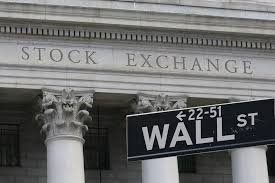
Global financial markets moved in opposite directions on Monday as investors parsed a weekend of escalating military operations between the United States and Iran. Asian equities staged a major rally, driven by heavy buying in Tokyo and Seoul. This surge occurred even as European indices drifted lower and American trading desks remained quiet for a federal holiday. Wall Street is watching closely. The geopolitical temperature in the Middle East has reached a dangerous new high, yet global capital showed surprising resilience on the first trading day of the week.
Geopolitical Escalation in the Gulf
The latest market movements follow a dramatic escalation of hostilities in the Middle East over the weekend. The Pentagon confirmed that U.S. forces carried out targeted strikes against three Iranian oil tankers. According to U.S. Central Command, Tehran retaliated almost immediately by firing ballistic missiles at American warships stationed in the region. The direct military exchange has dampened hopes for a swift diplomatic resolution to the ongoing conflict. High-stakes military strategy is now dictating the flow of global energy assets and maritime trade routes.
U.S. Energy Secretary Chris Wright cast a long shadow over potential diplomacy during an interview Sunday on ABC News’ "This Week." Wright suggested that a formal diplomatic agreement with Tehran might not be on the horizon. Instead, he signaled that the White House could take a more aggressive stance. "There may not be a nuclear agreement. It may be simply destroying their capabilities to do it," Wright told the network. He added that any future deal might have to wait for a change in Iran’s leadership. Preventing Tehran from acquiring nuclear weapons has remained a cornerstone of President Donald Trump’s foreign policy, even as his administration tries to negotiate to keep energy markets from boiling over.
Asian Tech Engines Fuel Massive Rally
Despite the drums of war, Asian traders focused heavily on domestic technology valuations. Japan’s Nikkei 225 index closed 2.12% higher, finishing the session at 66,399.84. In South Korea, the gains were even more dramatic. The Kospi index surged 4.61% to end at 6,995.39. These massive climbs show that investors are willing to compartmentalize geopolitical risk when tech earnings look strong. The rally was broad, but key tech heavyweights did the heavy lifting.
- Samsung Electronics jumped 5.68% in Seoul trading.
- SK Hynix skyrocketed 8.26% on strong semiconductor outlooks.
- SoftBank Group surged 11.22% in Tokyo.
- Advantest added 4.20% as semiconductor equipment demand remained robust.
Other parts of the Asia-Pacific region saw more muted trading. Australia’s benchmark S&P/ASX 200 managed to close slightly above the flatline at 9,010.90. In mainland China, the CSI 300 index registered a modest gain of 0.59% to finish at 4,575.02. Conversely, Hong Kong’s Hang Seng index bucked the regional upward trend, dropping 0.85% during its final hour of trade. The divergence highlights a clear split between technology-heavy northern Asian markets and the real-estate-heavy indices of Hong Kong.
European Markets Falter as German Politics Simmer
Europe did not share Asia’s optimism. The pan-European Stoxx 600 index slipped approximately 0.1% in morning trading. Regional sectors were highly fragmented. Energy companies led the few gainers, climbing 1.14% as oil prices reacted to the tanker strikes in the Middle East. Tech stocks in Europe rose a modest 0.55%, while utilities ticked up 0.53%. On the losing side, healthcare names dropped more than 1%, dragging down several major national indices.
National stock benchmarks across Europe reflected this cautious sentiment. Germany’s DAX lost 0.14% after starting the day on a positive note. In Paris, the French CAC 40 dropped 0.06%, while London’s FTSE 100 slid 0.12%. Italy proved to be an outlier, with the FTSE MIB gaining 0.37% in Milan. The mixed performance reflects a continent struggling with both domestic political shifts and the macroeconomic pressure of high borrowing costs.
German bond yields ticked up slightly on Monday morning following significant political developments. Exit polls from state elections in Saxony-Anhalt showed the far-right Alternative for Germany (AfD) taking first place. While it remains unclear if the party can form a majority, the political shockwave was felt immediately in fixed-income markets. The yield on the sensitive 10-year German bund rose by one basis point to 3.348%. The 30-year bund yield also edged up to 3.825%, while the short-term 2-year yield rose more than three basis points to 2.967%. Investors are now positioning themselves for Thursday’s critical European Central Bank meeting, where policymakers are widely expected to announce a quarter-percentage-point interest rate hike.
Corporate Dramas: Novartis and Nordex Make Waves
Individual stock stories dominated European trading desks. Shares of Swiss pharmaceutical giant Novartis fell as much as 3.6% early in the session. The drop followed an announcement that its experimental drug pelacarsen had failed to reduce cardiovascular risks in a late-stage clinical trial. Although the drug successfully lowered cholesterol levels, those numbers did not translate into better health outcomes for patients. The failed trial represents a severe setback for Novartis as it tries to navigate a wave of patent expirations on its most profitable treatments.
Novartis Chief Medical Officer Shreeram Aradhye tried to put a positive spin on the disappointing data. "These are not the results we hoped for," Aradhye said in a statement. He insisted that the trial still provided valuable data that could help guide future heart disease research. Novartis Chief Executive Officer Vas Narasimhan has frequently warned investors that the company is facing the steepest patent cliff in its history. Wall Street analysts had previously projected that pelacarsen could become a multi-billion-dollar blockbuster. The failure also sent shockwaves across the Atlantic. Novartis’s partner, Ionis Pharmaceuticals, saw its U.S.-listed shares plunge 10% in extended trading, while rival Amgen, which is working on a similar compound, fell 5%.
It wasn’t all bad news in Europe, however. German wind turbine manufacturer Nordex saw its shares soar 11.4%, topping the Stoxx 600 index. The sudden rally came after Bank of America analysts upgraded the stock to a Buy rating. BofA set a price target of 54 euros per share, pointing to strong order volumes in the United States and a resilient global supply chain. The analysts noted that Nordex’s management is well-positioned to raise its mid-term margin targets, offering a rare bright spot for the European industrial sector as energy costs continue to fluctuate.