Analyzing Brayan Rocchio’s Powerful Blast Against the Tigers
An in-depth breakdown of Brayan Rocchio’s home run on September 4, 2026, analyzing swing mechanics, Statcast metrics, and divisional impact.
The Anatomy of a September Spark
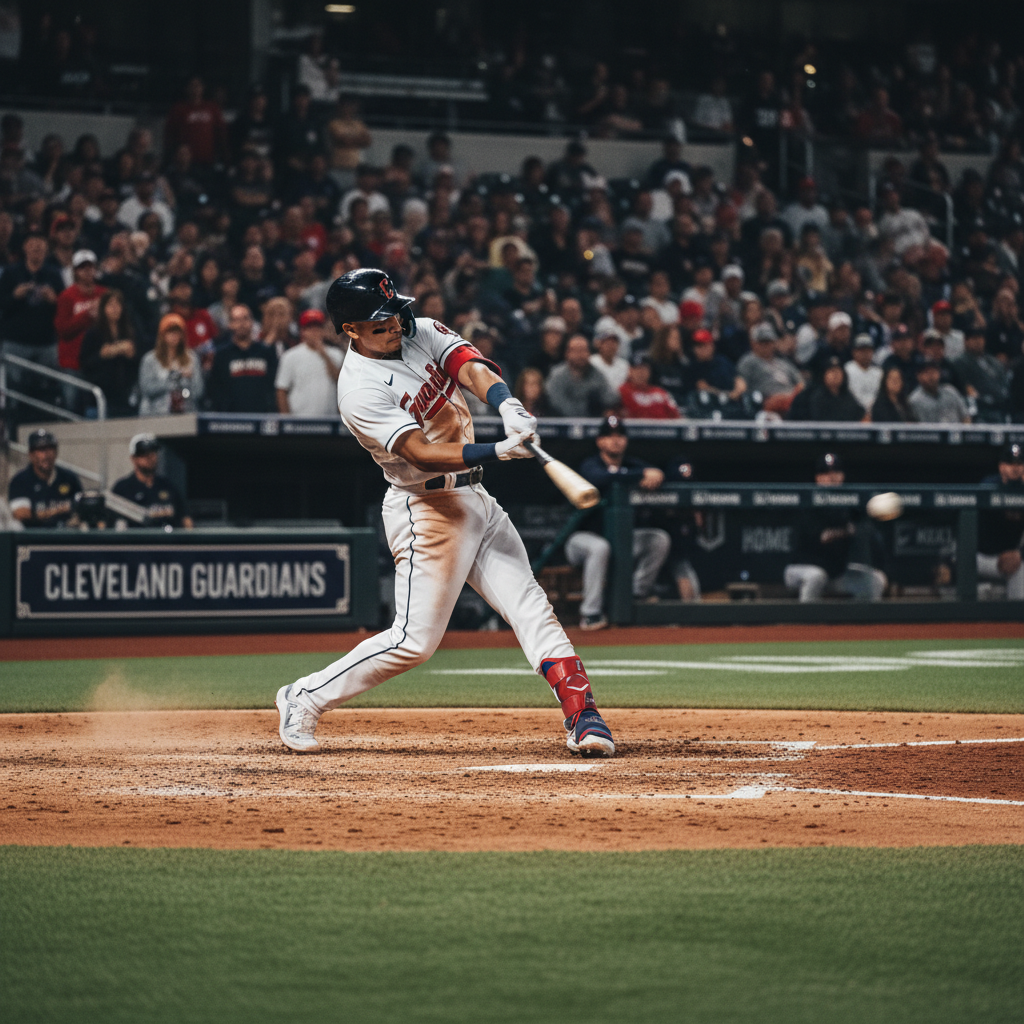
September baseball in the American League Central rarely offers room to breathe. On September 4, 2026, the Cleveland Guardians hosted the Detroit Tigers at Progressive Field in a matchup laden with postseason implications. With both teams fighting for division positioning, every single plate appearance carried the weight of a playoff atmosphere. Cleveland shortstop Brayan Rocchio stepped into the batter’s box during a tense middle inning, looking to break a scoreless deadlock. The young infielder, known more for his defensive wizardry than raw power, was about to deliver one of the most critical swings of his young career.
Detroit’s pitching staff had been dominant all evening, mixing high-velocity fastballs with biting breaking pitches to keep Cleveland hitters off-balance. Rocchio worked the count masterfully, laying off tough pitches just outside the zone to force the pitcher into a hitter-friendly count. When the offering finally came, it was a mistake over the heart of the plate. Rocchio did not hesitate. He unleashed a quick, compact stroke that met the ball with clean, flush contact. The crack of the bat echoed through the stadium, signaling immediately to everyone in attendance that this ball was headed deep into the outfield seats.
The ball sailed high into the cool autumn air, clearing the right-field wall with room to spare. Progressive Field erupted. For Rocchio, the home run was more than just a run on the scoreboard. It was a statement of his offensive growth and a testament to months of hard work behind the scenes with Cleveland’s hitting instructors. As he rounded the bases, his teammates leaned over the dugout railing, celebrating a moment that injected vital energy into a critical late-season contest.
Breaking Down the Swing Mechanics
To understand how a defensive specialist like Rocchio generated such explosive power, one must look closely at his mechanical adjustments. Historically, switch-hitters face a double challenge in maintaining consistent swing paths from both sides of the plate. From the left side, Rocchio has worked to eliminate excess movement in his load phase. On this specific pitch, his front foot planted early, establishing a firm foundation. This solid base allowed him to transfer energy efficiently from his lower half up through his torso.
His hands stayed incredibly quiet before the launch. Many young hitters struggle with drifting forward, which saps power and leaves them vulnerable to off-speed pitches. Rocchio stayed back. He kept his weight over his back hip, letting the ball travel deep into the hitting zone before committing. His wrists snapped through the zone with exceptional speed, generating a high level of rotational velocity. The barrel of his bat remained in the hitting zone for a long duration, maximizing his margin for error and ensuring clean contact.
The follow-through was equally telling. Rocchio finished high with two hands on the bat, a classic sign of a hitter who successfully lifted the ball without selling out his natural swing plane. This mechanical consistency has been a focus for Cleveland’s developmental staff all season. By flattening his entry angle and catching the ball slightly out front, Rocchio has turned himself into a far more dangerous hitter in hitter-friendly counts. Opposing pitchers can no longer simply challenge him with fastballs in the zone.
The Statcast Data Behind the Blast
Modern baseball analysis relies heavily on the numbers behind the play, and the Statcast data from Rocchio’s blast paints a picture of pure efficiency. The ball left his bat at an impressive exit velocity of 104.8 miles per hour. For a player who typically sits in the mid-90s for average exit velocity, hitting this threshold shows just how perfectly he squared up the pitch. When a hitter hits that triple-digit mark, good things almost always happen.
The launch angle was tracked at exactly 28 degrees. This is widely considered the sweet spot for home runs, offering the ideal trajectory to carry the ball over Major League outfields without turning into a harmless pop-up. The ball reached a maximum height of 95 feet, hanging in the air just long enough to build suspense before dropping into the seats. Statcast projected the total distance of the blast at 398 feet, a distance that would easily clear the fence in all 30 Major League ballparks.
- Exit Velocity: 104.8 mph
- Launch Angle: 28 degrees
- Max Height: 95 feet
- Projected Distance: 398 feet
- Pitch Type: 94 mph four-seam fastball
The pitcher’s mistake was a 94-mph four-seam fastball that failed to find the upper edge of the strike zone, leaking back over the inner half. Hitters at this level do not miss those opportunities often. Rocchio’s reaction time was measured at a blistering 0.14 seconds from the pitch release to his initial stride. This elite reaction speed allowed him to recognize the pitch spin early, adjust his posture, and deliver a swing that maximized his physical leverage.
Divisional Implications and the Road Ahead
As the final month of the regular season progresses, every divisional game in the AL Central takes on immense significance. The battle between Cleveland and Detroit has been a highlight of the season, characterized by intense pitching duels and tactical late-game maneuvers. Rocchio’s home run provided the offense with the cushion they desperately needed, proving that run support can come from any spot in the lineup. A balanced offense is what carries teams deep into October.
For Cleveland, Rocchio’s emergence as a viable offensive threat changes the team’s entire dynamic. When your bottom-of-the-order hitters can change the game with one swing, it puts immense pressure on opposing managers. They can no longer pitch around the middle of the order to face weaker hitters. Rocchio is forcing teams to pitch him with caution, which in turn creates more opportunities for his teammates. The confidence gained from these clutch moments is invaluable for a young squad eye-ing a deep postseason run.
With a demanding schedule ahead, Cleveland will need continued production from their entire roster. The coaching staff will undoubtedly point to Rocchio’s plate discipline and mechanical focus on September 4 as a blueprint for the rest of the team. If they can replicate this level of execution, the fans at Progressive Field will have plenty more to cheer about as autumn deepens. For now, Rocchio’s blast stands as a reminder of how quickly a single swing can shift the momentum of an entire season.
