Supreme Court Pauses Ruling on Political Ad Rates
The Supreme Court temporarily blocked a lower court ruling, keeping cheap advertising rates available to national political party committees.
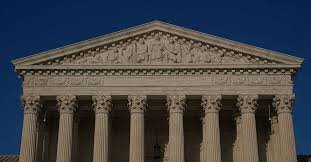
The Supreme Court stepped directly into the high-stakes battle over political advertising on Friday afternoon. In a brief, four-page unsigned order, the justices cleared the path for national political parties and joint fundraising committees to secure highly discounted television and radio airtime for the upcoming midterm elections.
The temporary freeze suspends a lower court decision that had limited these cheap rates strictly to individual candidates. For now, political parties can buy airtime at the same steep discounts usually reserved for candidates running for federal office.
Justice Ketanji Brown Jackson was the sole dissenter. She would have rejected the emergency application from the Republican campaign committees, leaving the lower court’s restriction in place.
The Battle Over Ad Rates
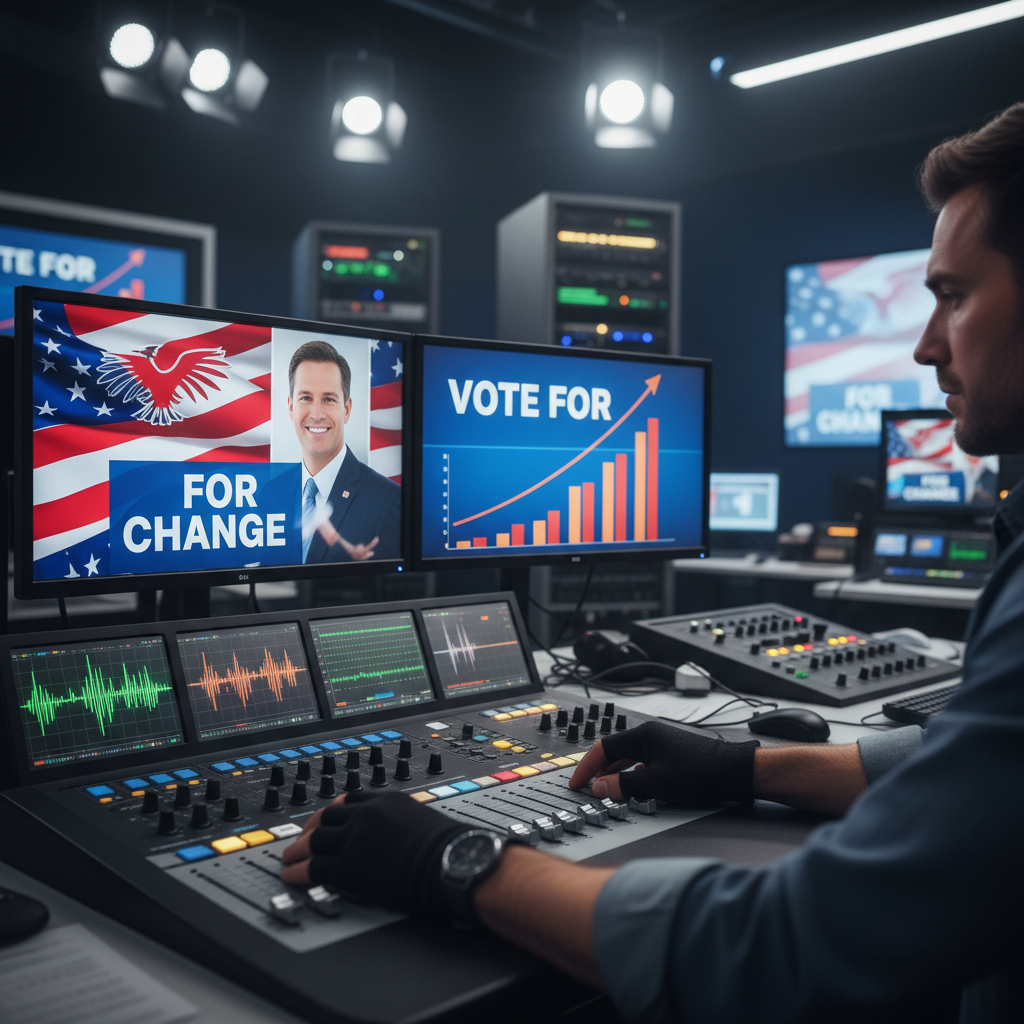
At its heart, this fight is about cash. Advertising is the single biggest expense for most modern political campaigns. Under long-standing federal election laws, certified candidates for federal office have a legal right to the lowest unit charge from broadcasters. This special discount applies during key windows: 45 days before a primary election and 60 days before a general election.
The system keeps candidate costs down. However, political action committees and party organizations typically pay much higher market rates for the exact same commercial slots. The difference can add up to millions of dollars over a single campaign cycle.
The rules changed this spring. On March 30, the Federal Communications Commission’s Media Bureau issued a public notice. The staff-level guidance stated that political parties and joint fundraising committees are also entitled to those same steep discounts when they run ads authorized by a candidate.
Democrats Mount a Challenge
Democratic lawmakers reacted quickly. Senator Jon Ossoff of Georgia, along with three other Democratic congressional candidates, filed a formal petition with the full FCC on April 29. They demanded that the commission throw out the staff’s new guidance.
Six weeks passed without a word from the agency. With election season fast approaching, the candidates decided they could not wait. They bypassed the agency and sued in federal court, arguing that the FCC’s public notice violated federal election laws.
A divided three-judge panel of the U.S. Court of Appeals for the 4th Circuit agreed with the Democrats. Writing for the majority, Judge Robert King declared that federal law is perfectly clear. The statute reserves preferential rates only for candidates for their own personal use. It does not allow a candidate to simply authorize another group to use their discount, King wrote.
A Premature Decision?
The dissenting judge on the appeals court, J. Harvie Wilkinson, took a different view. He argued that his colleagues had jumped the gun. Because the full FCC was still considering the Democrats’ petition, the court had no business interfering yet, Wilkinson wrote. He also warned that the majority’s decision would hurt political speech during a sensitive pre-election period.
The National Republican Senatorial Committee and the National Republican Congressional Committee took that argument straight to the Supreme Court late last month. They argued that the 4th Circuit lacked jurisdiction to hear the case. Federal courts only have the power to review final agency orders from the FCC, the Republican groups argued. A staff-level public notice does not meet that high bar.
The Trump administration also weighed in to support the Republican campaign groups. Solicitor General D. John Sauer argued that the Democratic candidates lacked standing to bring the lawsuit. The FCC notice does not favor one political party over another, Sauer wrote. Instead, it offers the exact same financial benefit to campaigns on both sides of the aisle.

Defining Candidate Use
The legal fight hinges on the definition of a single word: use. Under the Communications Act, the discount applies when a candidate or an authorized committee uses a broadcasting station. The Republican campaign committees argued that the identity of the bank account paying for the advertisement is completely irrelevant to the law.
Instead, they argued that a candidate uses the station whenever they appear in the commercial itself. Under this theory, if a candidate records a 30-second spot endorsing their party’s ticket, and a national party committee pays for the airtime, the ad should still qualify for the lowest unit rate. It is an argument that would dramatically expand the purchasing power of national party machines.
The Democratic candidates countered that this reading tears up decades of established precedent. They argued that the discount was designed to help individual candidates communicate directly with voters, not to subsidize wealthy national committees. Giving national parties access to these rates would effectively hand control of local airwaves over to national party bosses, they warned.
High Stakes and the Fight Ahead
The Democratic candidates pleaded with the Supreme Court to leave the 4th Circuit’s ruling in place. They argued that the FCC itself had spent decades maintaining that only candidates get the discounted rates. They pointed out that no federal court had ever suggested otherwise until this year.
The financial impact of the ruling could be massive. The Democrats warned the justices that their Republican rivals had already promised to exploit the loophole. They cited statements from Republican groups pledging to spend hundreds of millions of dollars using candidate rates to swamp Democratic campaigns. They warned that this influx of cheap money would overwhelm their own efforts.
The candidates also defended their decision to sue before the FCC finished its review. They argued that federal law explicitly allows appeals courts to step in once a party has filed an application for review with the agency.
The Supreme Court’s majority did not buy that argument. In its brief order, the court wrote that the Republican committees are highly likely to win their argument that the 4th Circuit had no authority to act before the full FCC did. The justices put the lower court’s ruling on hold while the case continues to play out in the courts. For the upcoming midterm elections, the cheap ad rates remain wide open for both parties.