How Iran Found Its Edge After Six Months of Regional Conflict
Despite U.S. attempts at deterrence, Tehran has leveraged its proxies and global partnerships to emerge from six months of crisis more confident than ever.
The Illusion of Deterrence
Six months ago, when the current crisis in the Middle East erupted, Washington sent a clear and heavy-handed message to Tehran: Stay out of this. The United States quickly deployed aircraft carriers to the Eastern Mediterranean, shifted thousands of troops, and issued stern public warnings. The goal was to build a wall of deterrence that would keep Iran and its regional allies from widening the war.
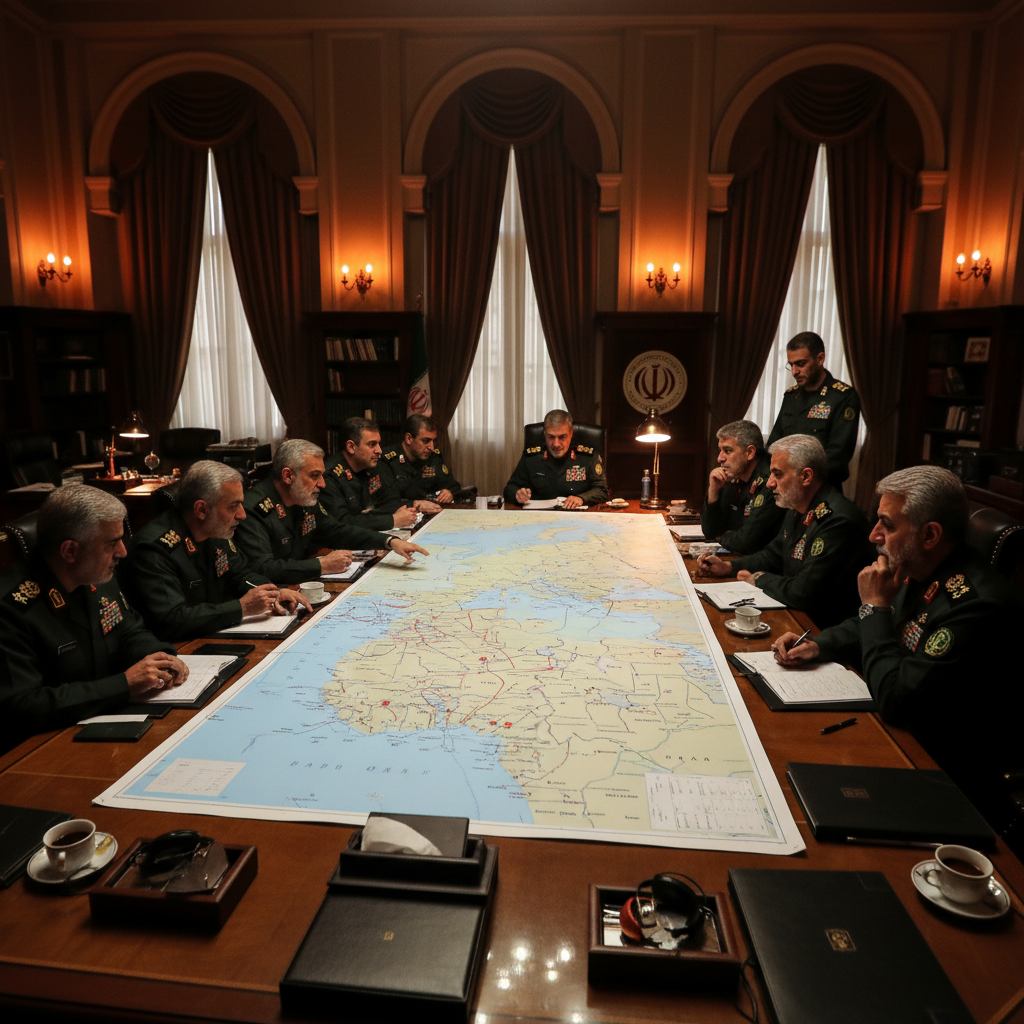
Today, those warnings look increasingly hollow. Instead of backing down, Iran has spent the last half-year orchestrating a multi-front pressure campaign that has stretched American military resources to their limits and rewritten the rules of Middle Eastern deterrence. From the halls of power in Tehran, the view is remarkably clear. The Islamic Republic does not think it is losing. In fact, its leadership has never felt more confident.
The Asymmetric Math in the Red Sea
For decades, Iran built its “Axis of Resistance” precisely for this kind of moment. Now, that investment is paying off. Take the Houthis in Yemen. Armed with cheap Iranian anti-ship missiles and attack drones, a rebel group in one of the world’s poorest countries has successfully choked off a vital global shipping lane.
The U.S. Navy launched Operation Prosperity Guardian to stop them, deploying advanced warships to the Red Sea. Yet, the math of this engagement favors Tehran. American sailors are firing multimillion-dollar air defense missiles to shoot down drones that cost the Houthis about $20,000 to make. Despite months of airstrikes on Houthi launch sites, major international shipping companies are still detouring thousands of miles around the Cape of Good Hope to avoid the Bab el-Mandeb strait.
To Tehran, this is a massive strategic victory. They have proven they can disrupt global commerce and humiliate the world’s premier naval power without firing a single shot of their own. It is asymmetric warfare at its most effective.
Meanwhile, in Iraq and Syria, local militias have kept U.S. bases under constant threat. A drone strike on a remote outpost in Jordan killed three American soldiers in January, forcing a brief, calculated U.S. retaliatory campaign. But the point was made: American forces in the region are vulnerable, and keeping them there comes with a high political and human cost.
Rewriting the Rules of Engagement
The biggest shift in Iran’s posture came in April, marking a historic break from decades of strategic patience. For years, Israel and Iran fought a quiet shadow war. Israel assassinated Iranian nuclear scientists and bombed military assets in Syria, while Iran worked through its regional proxies to harass Israeli borders. Neither side wanted to cross the line into direct state-on-state conflict.
That changed when an Israeli airstrike demolished an Iranian consular building in Damascus, killing several high-ranking Revolutionary Guard commanders. Tehran decided the old playbook was dead. On April 13, it launched more than 300 drones and missiles directly from Iranian soil at Israel.
While U.S., British, French, and Israeli air defenses intercepted the vast majority of the incoming fire, the strategic reality shifted permanently. Iran proved it was willing to risk direct, large-scale war to protect its red lines. The subsequent retaliatory strike by Israel was notably limited, suggesting that both Jerusalem and Washington wanted to climb down from the brink.
“The Iranians established a new normal,” says a Middle East security analyst based in London. “They proved that they will retaliate directly from their own territory if pushed too far. That changes every risk calculation in Washington and Tel Aviv.”
The Moscow-Beijing Lifeline
Why is Tehran acting so boldly? A big part of the answer lies outside the Middle East. Iran is no longer the isolated pariah state it was a decade ago. While Western sanctions still choke the Iranian public, the regime has found a powerful diplomatic and economic lifeline.
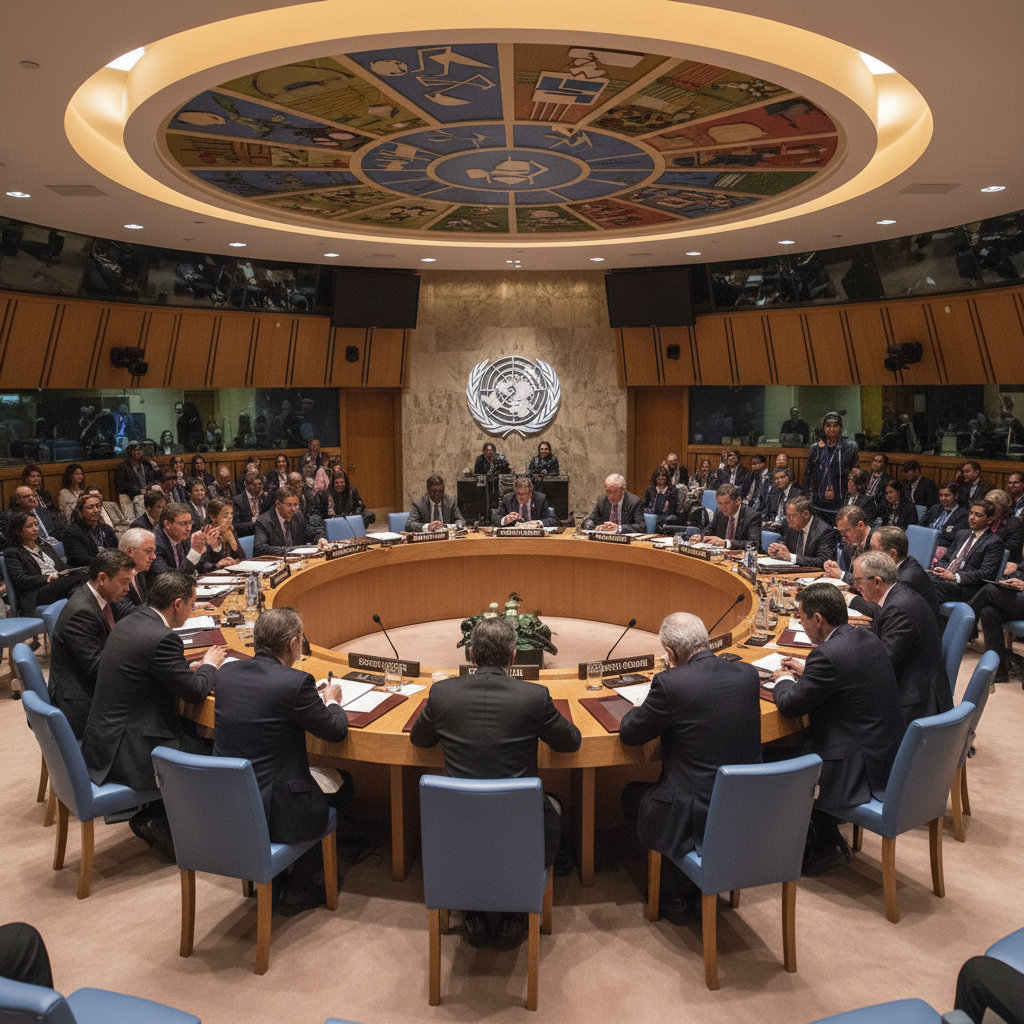
Russia, bogged down in its own grinding war in Ukraine, needs Iranian military technology. Tehran has supplied thousands of Shahed drones and ammunition to Moscow, receiving advanced military hardware, aviation technology, and invaluable diplomatic cover at the UN Security Council in return.
At the same time, Beijing keeps buying Iranian oil. Despite heavy U.S. secondary sanctions, China imports millions of barrels of discounted Iranian crude daily, keeping the regime’s economy afloat. This new axis of convenience means Washington can no longer use economic isolation as an effective weapon. With Moscow and Beijing in its corner, Tehran feels insulated from Western pressure.
Nuclear Leverage and Domestic Realities
While the world’s attention was fixed on Gaza, Yemen, and the Israel-Lebanon border, Iran’s nuclear centrifuges kept spinning. International monitors warn that Tehran has accumulated enough highly enriched uranium to build several nuclear warheads if it chooses to do so.
In the past, the threat of U.S. or Israeli military strikes kept Iran’s nuclear ambitions somewhat in check. Now, with Washington desperate to avoid a broader regional war that could spike oil prices during an election year, that threat has lost its teeth. Iran is using its nuclear progress as a shield. It knows the U.S. is highly unlikely to launch a pre-emptive strike when American troops in Iraq, Syria, and Jordan are so vulnerable to proxy retaliation.
Still, it is not all smooth sailing for the supreme leader, Ayatollah Ali Khamenei. Domestically, the regime faces deep, simmering public anger. Inflation is running high, the local currency is near historic lows, and the memory of the brutal crackdown on the “Woman, Life, Freedom” protests is still fresh in the minds of the youth.
But authoritarian regimes rarely fall because of economic pain alone. As long as the security apparatus remains loyal, well-funded, and willing to use force, and as long as the oil money keeps flowing from Beijing, Khamenei and his generals believe they can weather any domestic storm. For them, the regional conflict has served as a useful distraction from internal misery, allowing the regime to wrap itself in the flag of anti-imperialism.
A New Geopolitical Reality
After six months of escalating violence, the balance of power in the Middle East has fundamentally shifted. The U.S. entered this crisis hoping to contain the conflict and reassert its traditional role as the region’s security guarantor. Instead, Washington has found itself playing defense, burning through expensive ammunition, and struggling to keep shipping lanes open.
Iran has demonstrated that its proxy network is resilient, its military capability is formidable, and its diplomatic alliances with global powers are secure. The old days of unchallenged American dominance in the region are slipping away. Tehran knows it, and that is why its leaders are smiling.